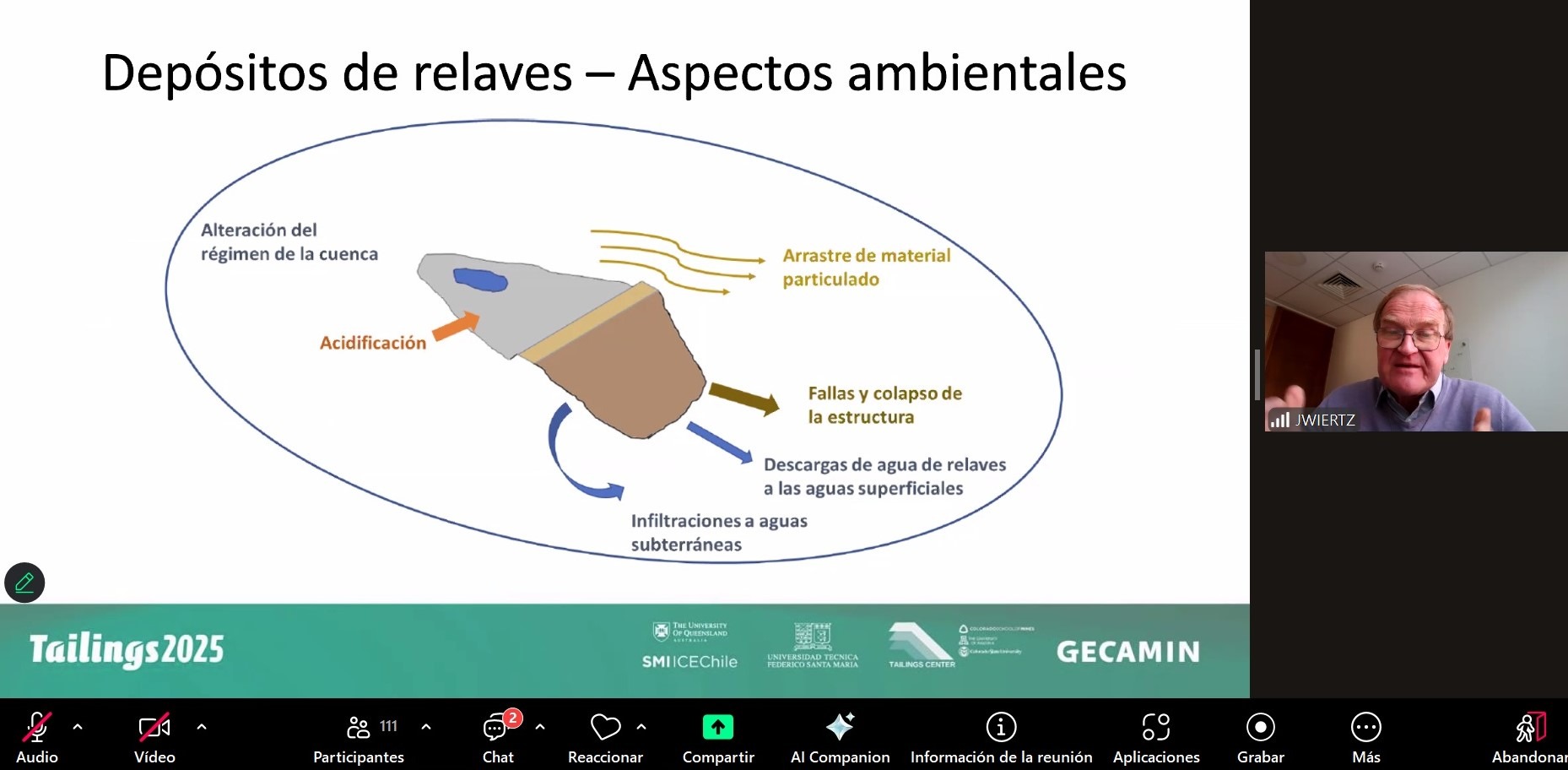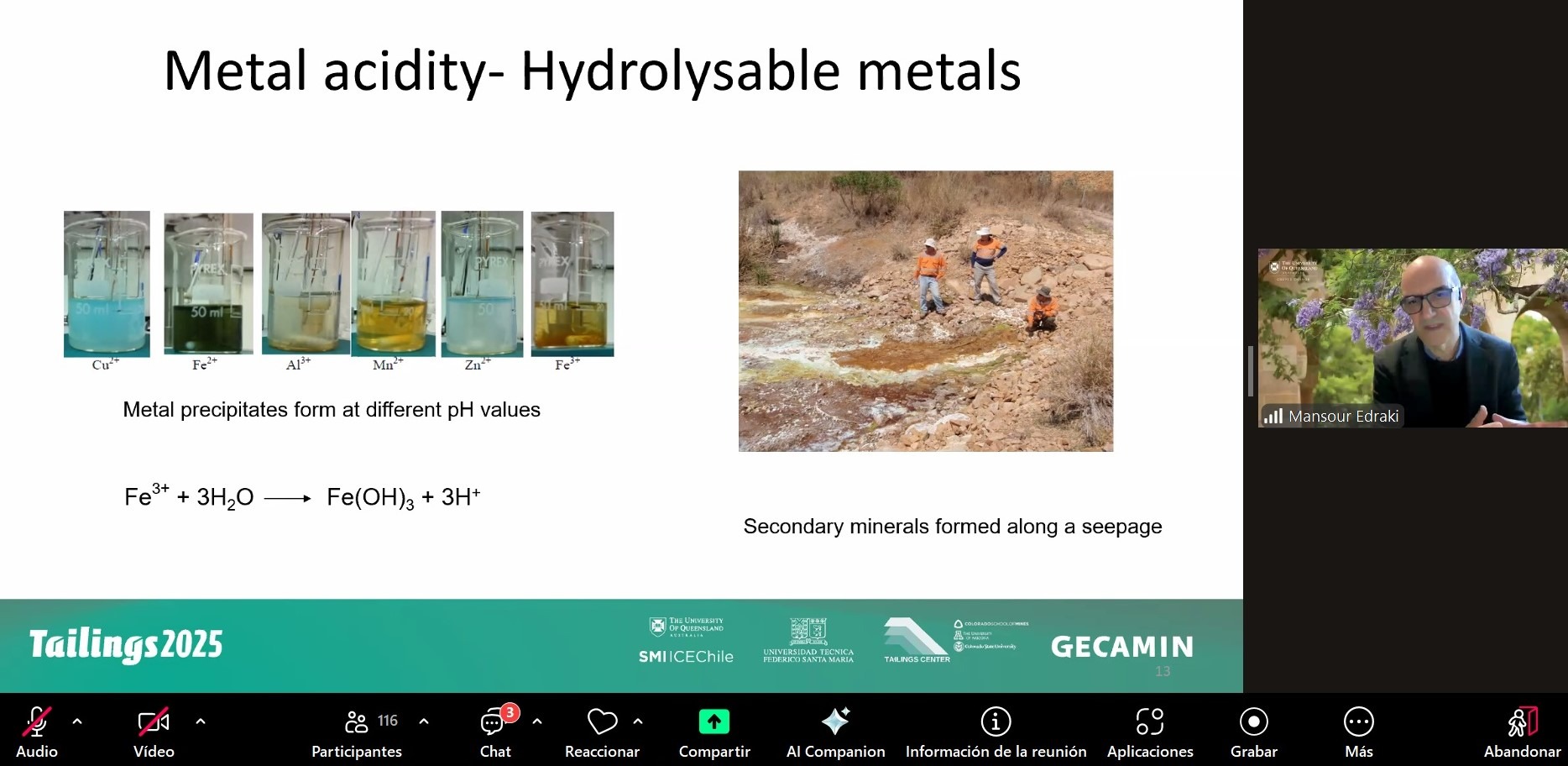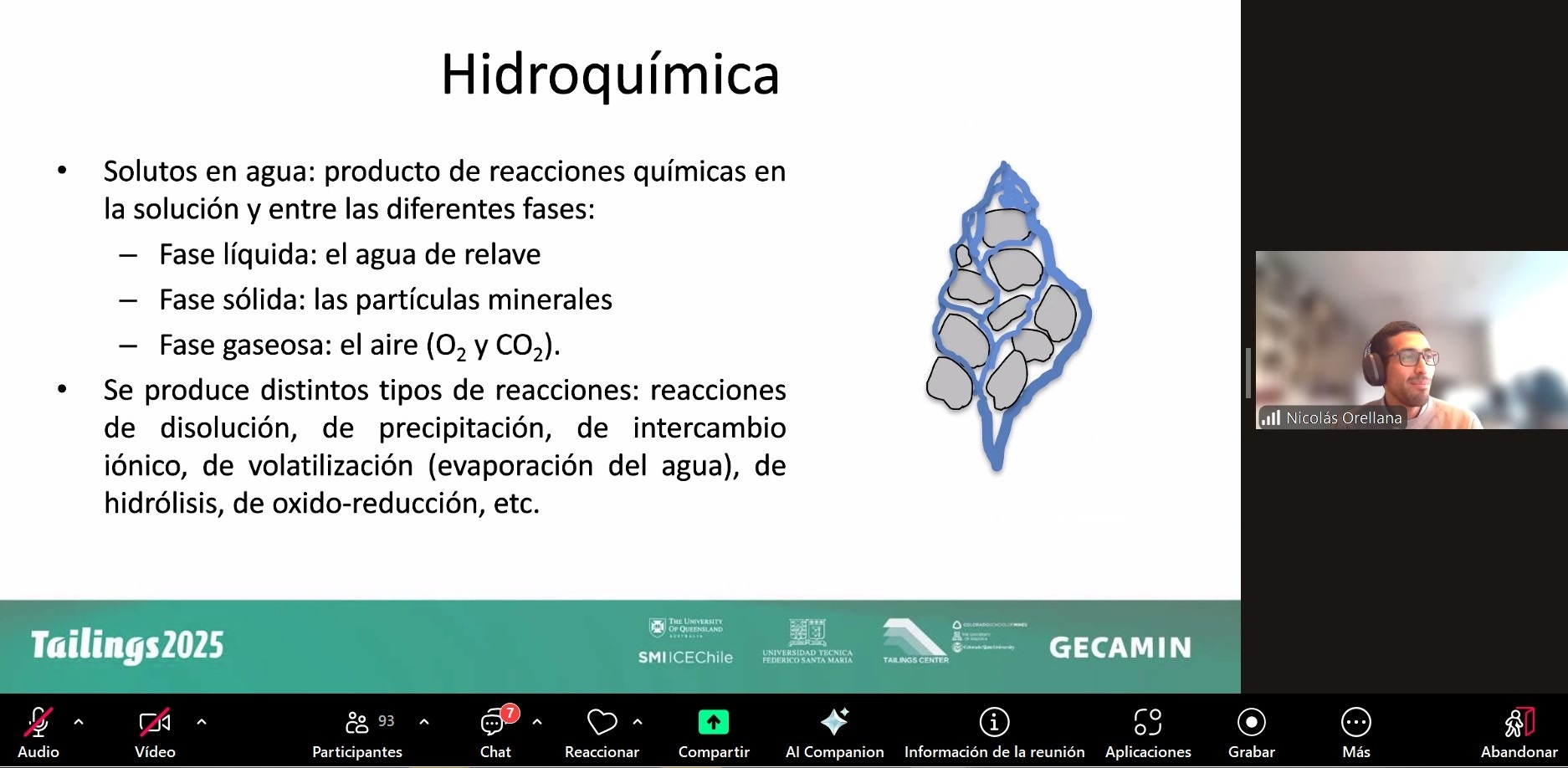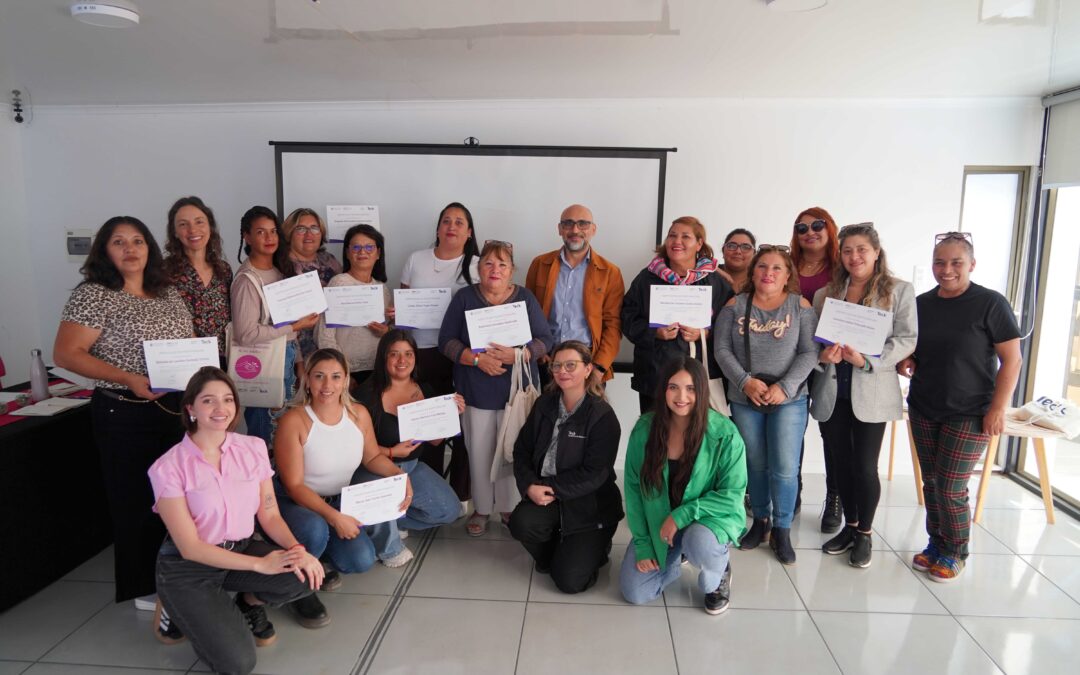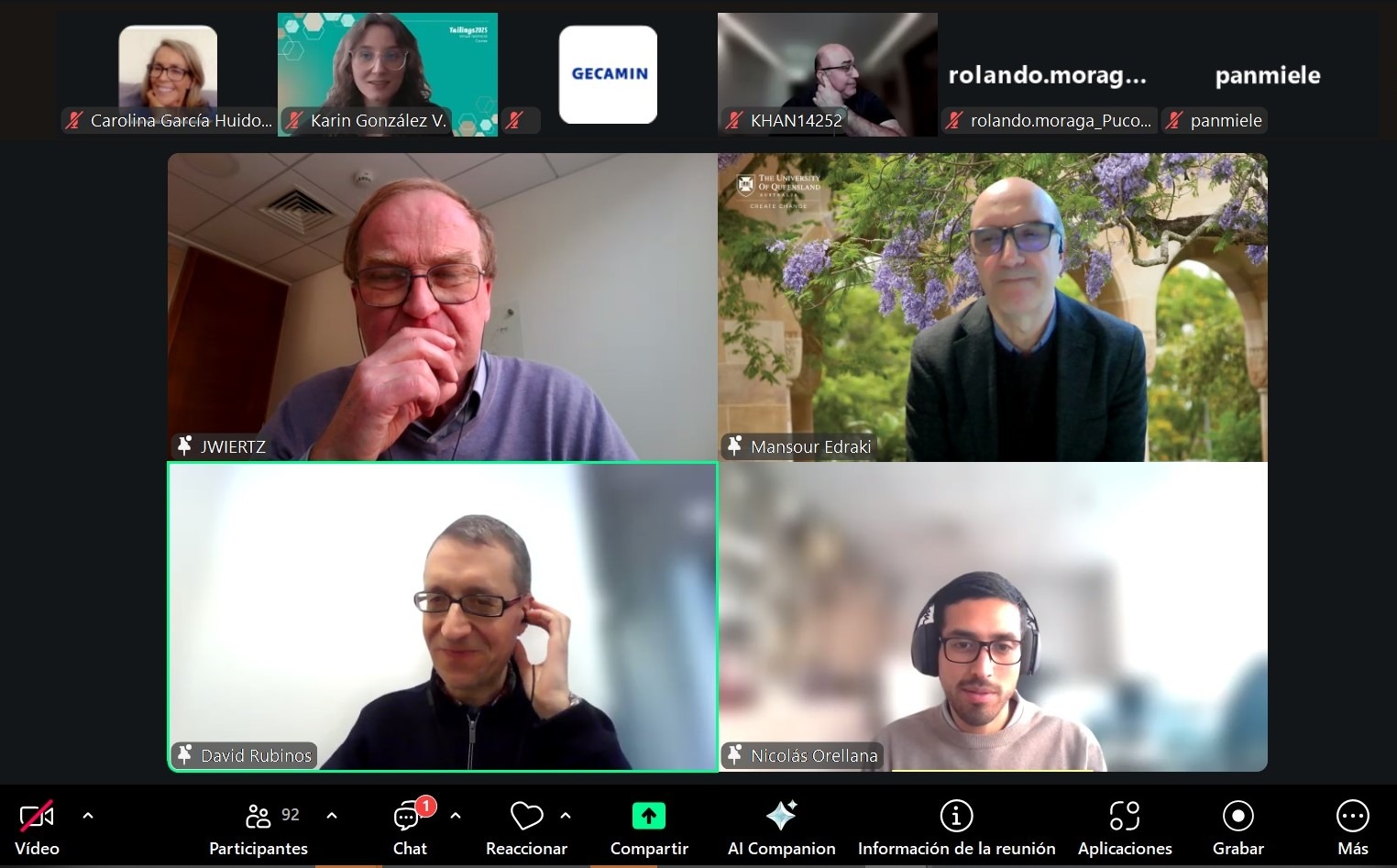
The online training session, attended by 115 participants, was part of the preliminary program for Tailings2025, the International Congress on Tailings Management, organized by Gecamin.
The course was taught by Dr. Jacques Wiertz, leader of the Environmental Rehabilitation and Ecosystem Dynamics team at SMI-ICE-Chile; Mansour Edraki, Group Leader of the Environmental Geochemistry CWiMI at the Sustainable Minerals Institute at The University of Queensland; and Nicolás Orellana, Junior Research Fellow at SMI-ICE-Chile. Dr. David Rubinos, Scientific Leader at SMI-ICE-Chile, served as the team coordinator.
The physical and chemical stability of tailings dams is one of the most critical challenges facing the Chilean and global mining industry, due to the environmental and social commitments associated with mine closure processes. According to the latest information from the National Geology and Mining Service, Chile has a total of 795 tailings dams (128 active; 601 inactive; 53 abandoned; 12 under construction; and one under review).
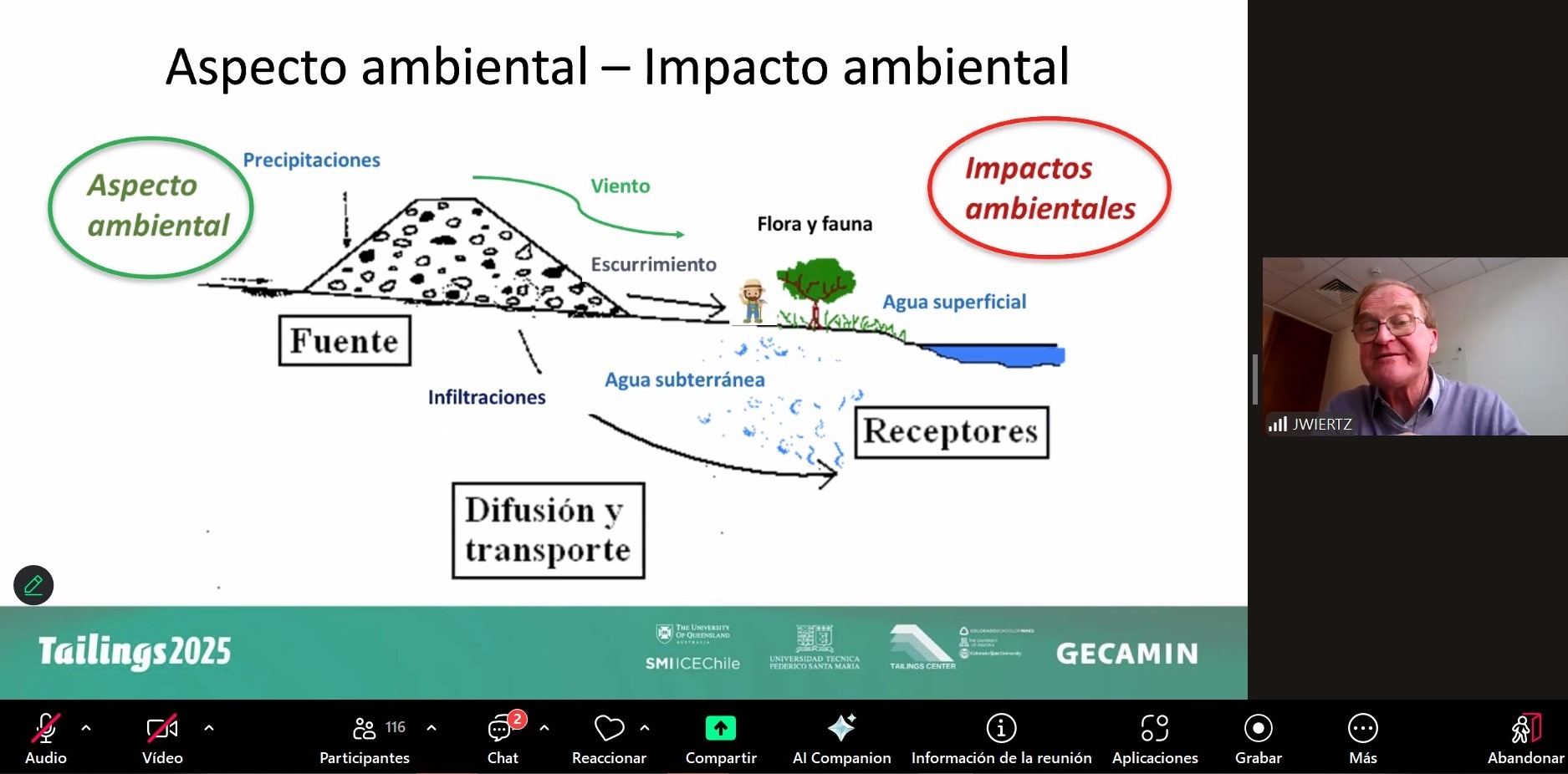
While the physical stability of tailings dams remains a central concern for most mining operators, chemical stability is another source of growing concern due to the associated environmental risks and the high costs of controlling drainage and infiltration during the dam operation and closure stages.
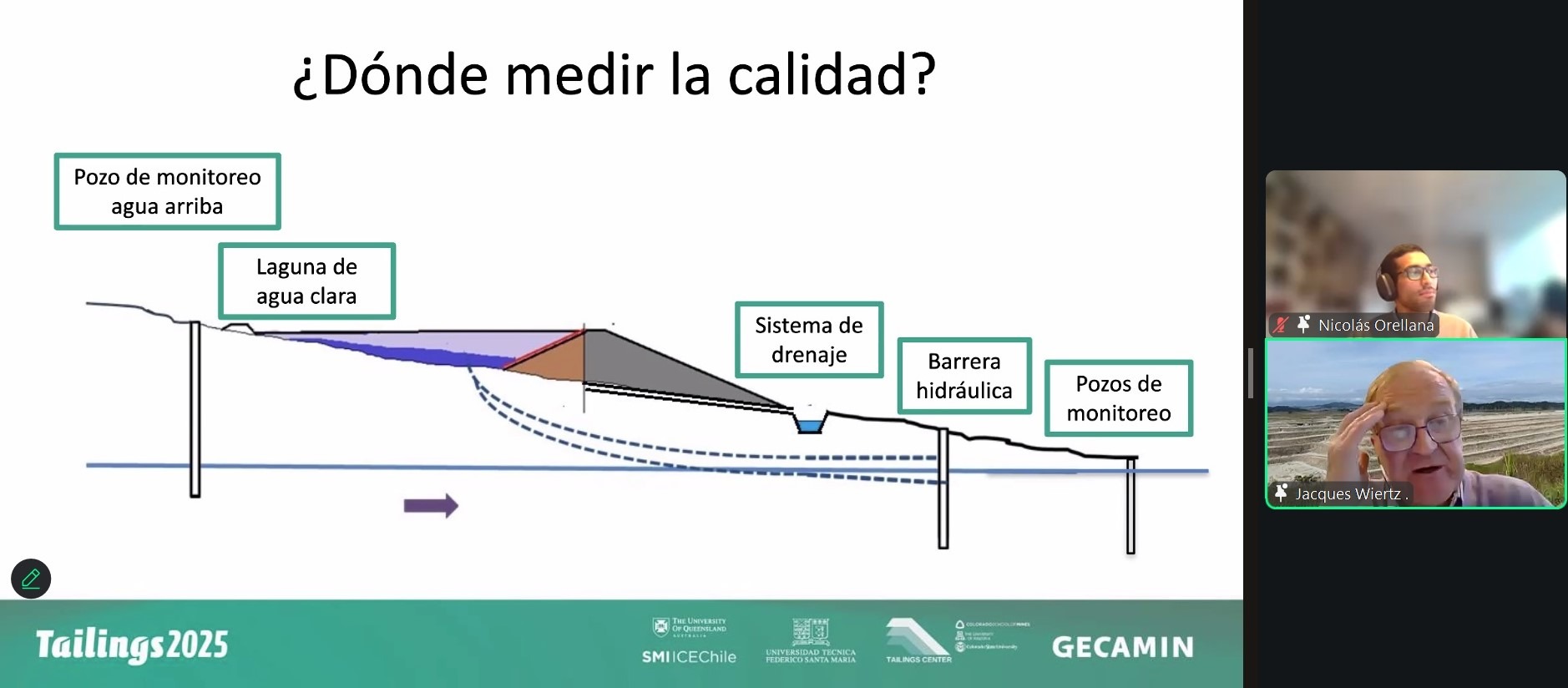
“Due to environmental regulations and standards, efforts to study the water in tailings dams and their surroundings have increased in recent years,” explains Jacques Wiertz. “That’s why the waters of the Aguas Claras lagoon, its drains, ditches, and surrounding wells are sampled and analyzed. However, the valuable hydrochemical information generated is underutilized. It is reported to comply with environmental commitments, but there is little clarity regarding the interpretation of the results of these analyses, a very valuable tool that could support dam management. Tailings water is like the ‘blood’ of the dam, and a thorough analysis of its composition can tell us a lot about the ‘health’ of these dams.”
The course addressed the hydrogeochemical processes that determine water quality in mine tailing’s deposits, analyzing the operational and environmental implications of the evolution of water quality in these deposits. This included processes such as precipitate formation in the drainage system, ion exchange, pore water retention, sulfide oxidation, and neutralization reactions, which explain the differences in hydrochemistry between the Aguas Claras lagoon and the drainages. The course also analyzed the system’s sensitivity to changes in the water regime and the mineralogy of the processed minerals.
“Today, in Chile, physical stability is fairly well managed,” adds Jacques Wiertz. “We have learned to build tailings dams capable of withstanding seismic activity, but we haven’t made that progress in chemical stability, where, upon reviewing regulations and studies, we find much room for improvement. There is ample prediction, but little prevention and control. Reviewing EIAs reveals potential acid-generating material, however, little is done, for example, to eliminate or encapsulate pyrite, the cursed pyrite that generates acid drainage. There is much room for improvement in the quest to reconcile physical and chemical stability, especially considering a long-term perspective, since, in mine closure processes, the natural drainage of the dam can take many years, and the sulfide oxidation process can persist for a long time.”