The study, developed by experts from SMI-ICE-Chile and Universidad de Concepción based on natural radionuclides, proposes a methodology that will be used for future cases of environmental forensic science in Chile and in the world, enabling more informed decision-making and preventive measures in environmental matters.
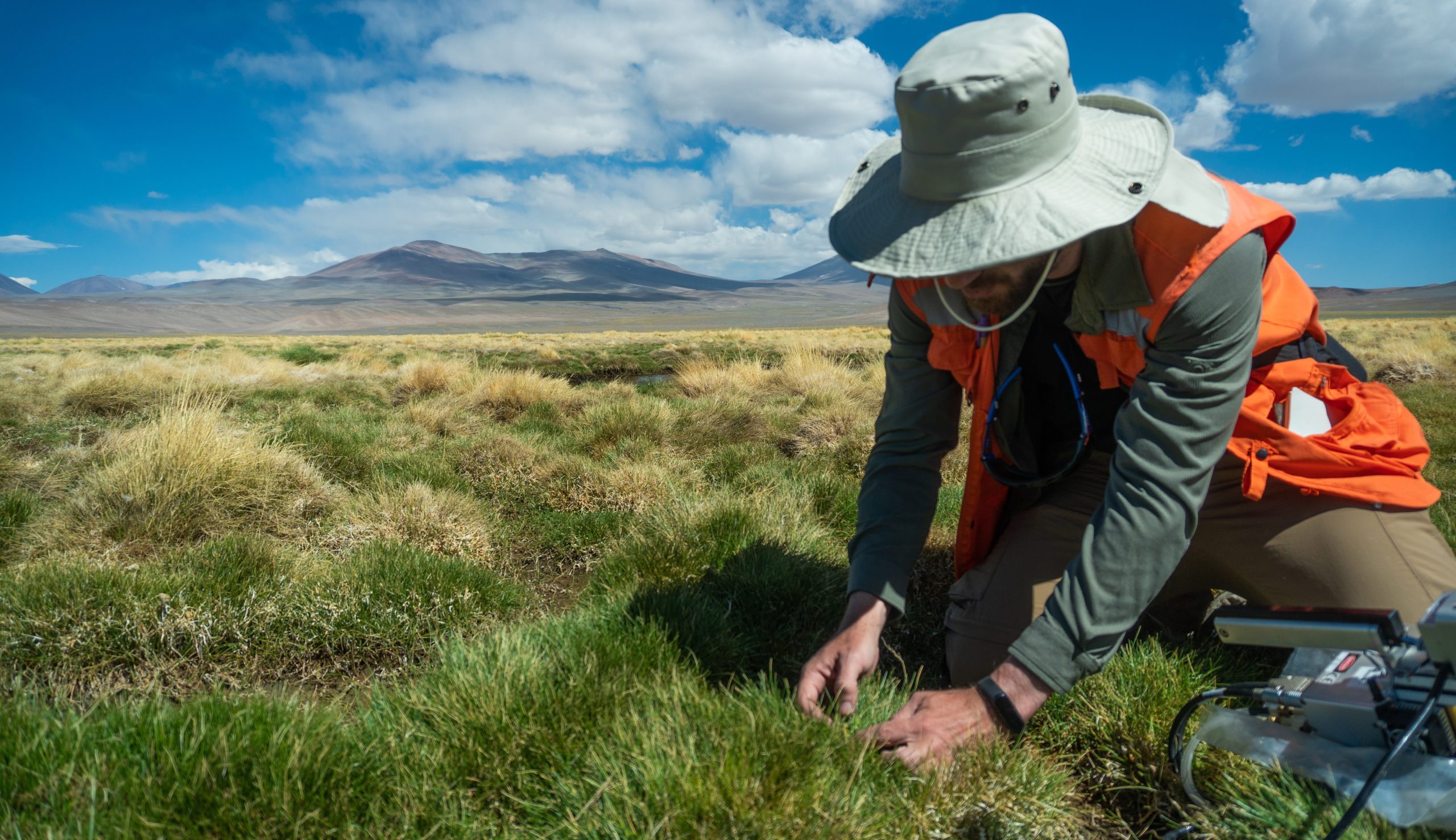
The forensic analysis of the vegetation in the Pedernales Salt Flat, an Azonal Hydro-Terrestrial Vegetative System (SVAHT), aimed to estimate the date and dynamics of plant death in that area. Among the more specific objectives was to estimate the time interval between the living plants () occupying the salt flat area and the dead plants (stubble) inhabiting the denuded area or sector with less vegetation.
The research relied on natural radionuclides in the tissues of living and dead plants, used as natural geochronometers to estimate the date of death. These natural radionuclides are absorbed from the atmosphere and soils (through groundwater).
As there is no known methodology for estimating the approximate time of vegetation impact in this particular high Andean saline environment, the study was designed using a forensic method based on natural radionuclides, specifically 210 Pb, which can serve as a geochronometer in a time interval of up to 150 years.


The general model of the SVAHT’s death dynamics in the Pedernales Salt Flat shows how the vegetation surface area would have begun to shrink, giving rise to three zones: an inactive zone, an intermediate zone and an active zone. The results reveal that the decrease in the vegetation surface area would have been a gradual process, with plant death beginning around 1951 in the inactive zone and around 1959 in the intermediate zone. This process would have lasted approximately 71.5 years in the inactive zone and 62.9 years in the intermediate zone, stabilizing between 2010 and 2011. The greatest ages of plant death in the studied zone are observed in the plants at the extreme south of the inactive zone, indicating that the decrease in the SVAHT’s surface area would have initially occurred from south to north.


This project was commissioned by Codelco’s Salvador Division in December 2020.
Download informational brochure