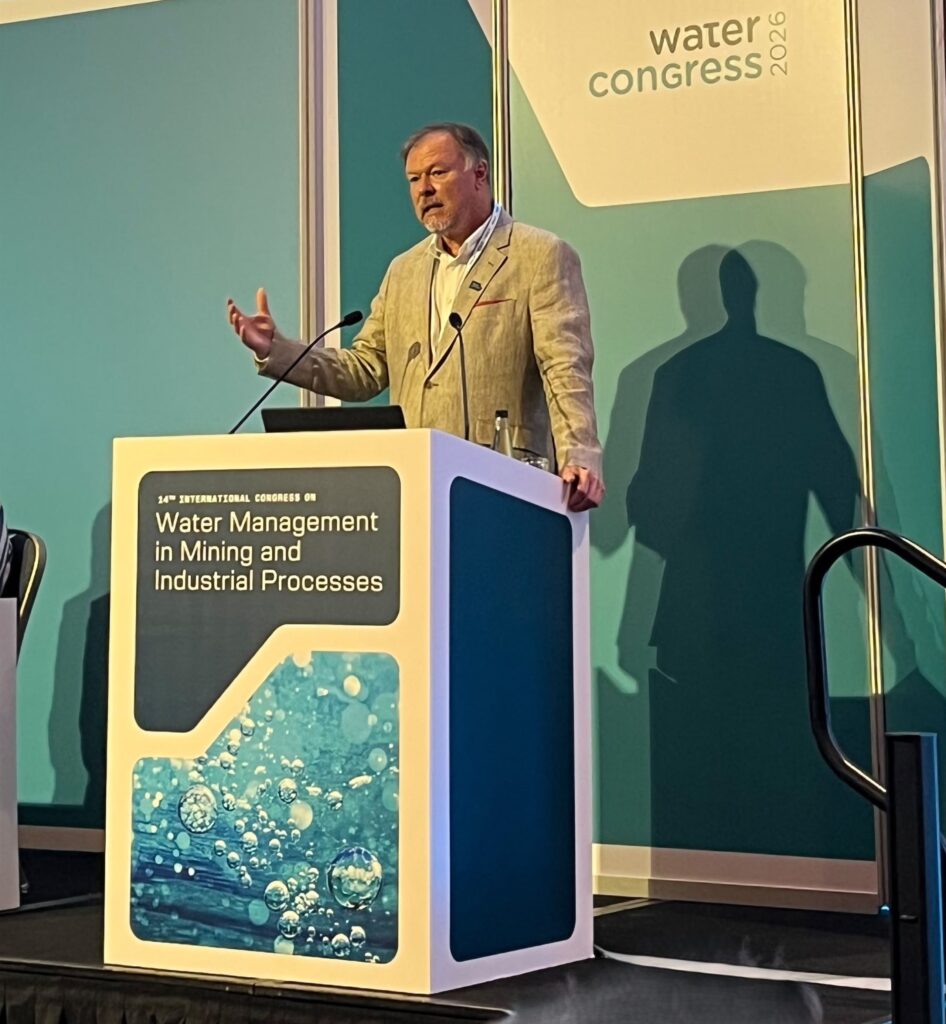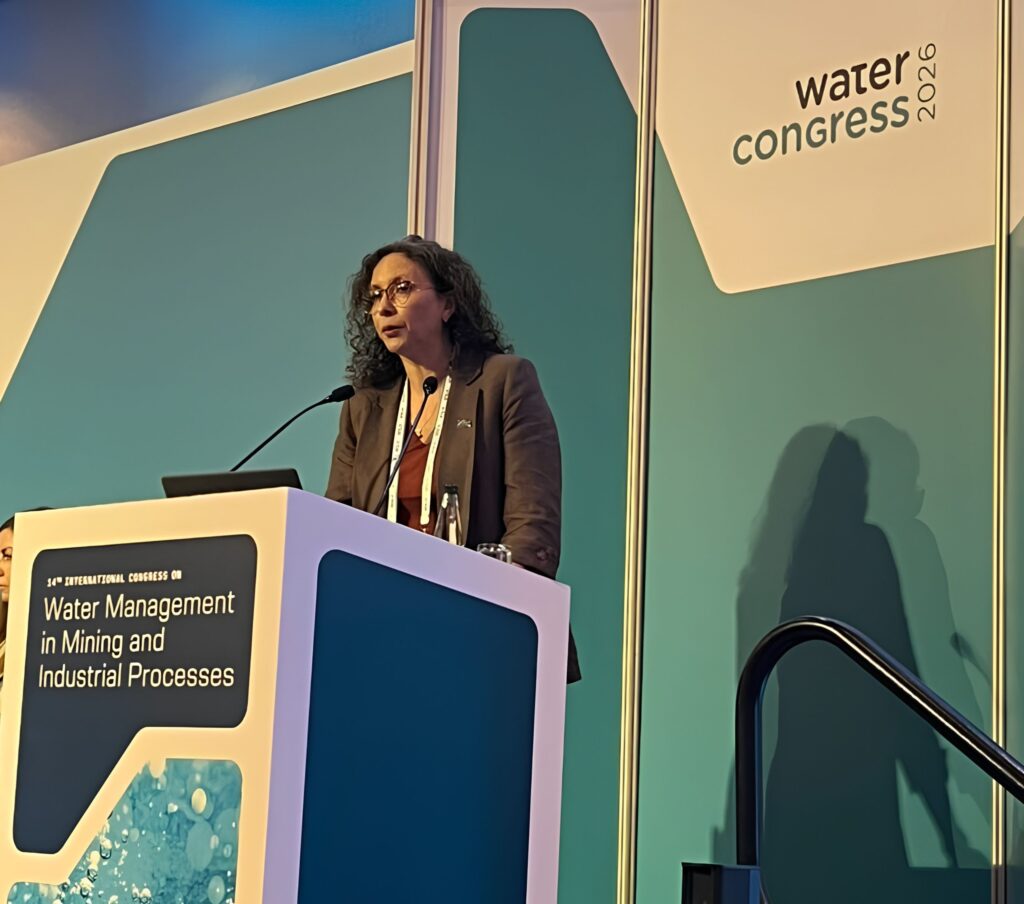
All of our Centre’s research areas were represented at Water Congress 2026, with presentations on the use and management of water in mining from production, social and environmental perspectives.
This year, against the backdrop of the impacts of the El Niño phenomenon in recent months, discussions at this international conference on water management focused strongly on the effects of climate change on water management, both for public consumption and for mining production and industrial processes more broadly.
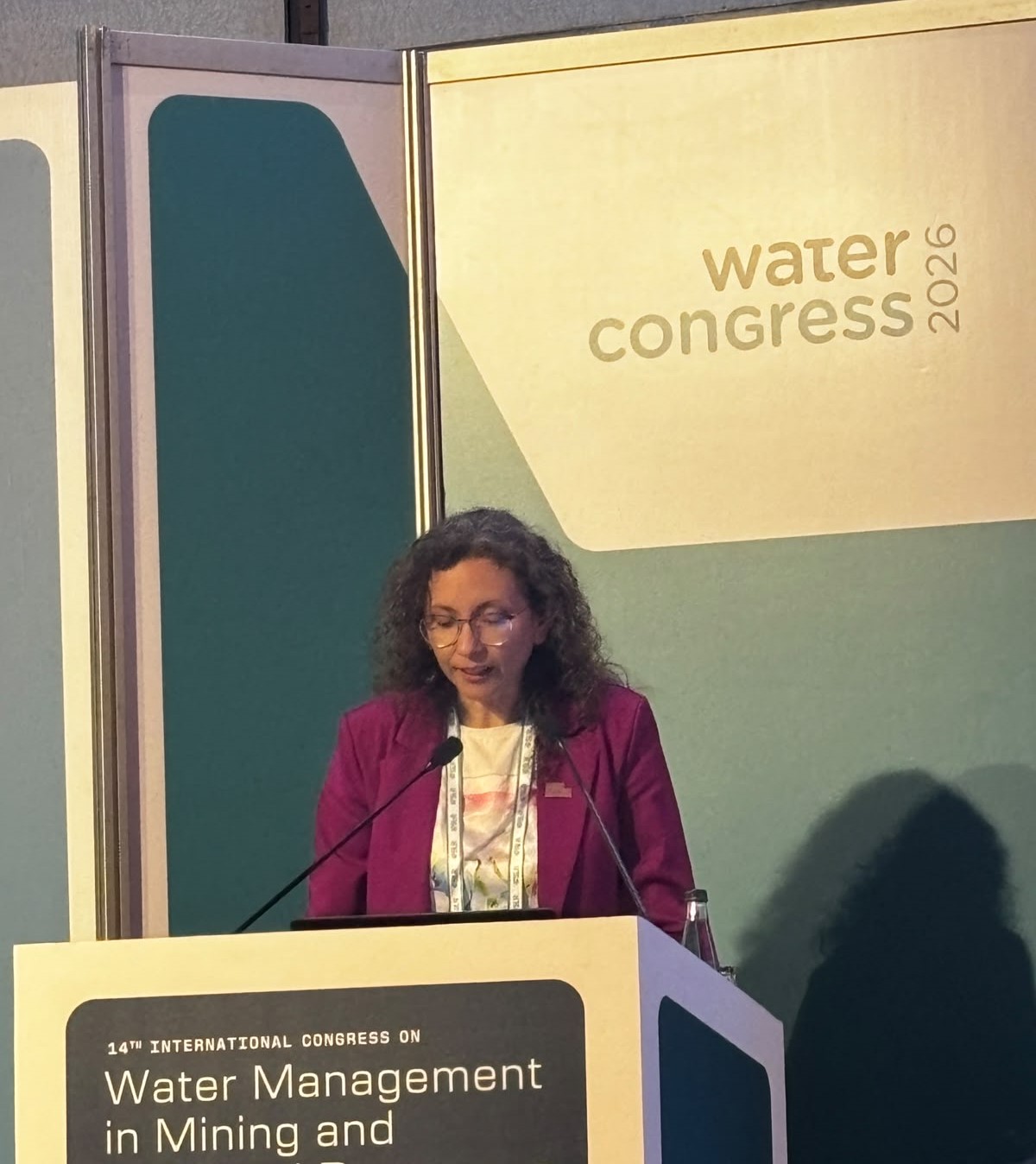
At the opening ceremony, Nathalie Jamett, Senior Researcher at SMI Chile, was one of the keynote speakers, alongside the Ambassador of the Netherlands, *Elke Merks-Schaapveld; Gladys Vidal, Director and Principal Researcher at the Centre for Water Resources for Agriculture and Mining (CRHIAM); Omar del Castillo, Director of the Institute of Hydraulic Research at the University of San Juan; and Roberto Rondanelli, Associate Professor in the Department of Geophysics at the University of Chile and Director of the Centre for Climate and Resilience Research (CR2).
In her address, Nathalie Jamett called for a long-term approach to water management, taking into account both the effects of climate change and the differences between territories. After noting that Chile ended 2025 as the warmest year on record, with nineteen consecutive years of rainfall below the climatological average, she warned that rainfall and the recovery of some reservoirs during 2026 did not erase the accumulated water stress caused by the prolonged megadrought.
“National averages”, she said, “can conceal very different realities across river basins and territories. Decisions must therefore be based on local information, continuous monitoring and scenarios that account for climate uncertainty. We must anticipate future challenges through flexible and resilient infrastructure, timely maintenance and diversified water sources, with standards suited to the climatic conditions expected over the coming decades.
“The future of water is built on evidence, investment, collaboration and bold decisions”, Nathalie Jamett concluded.
SMI Chile’s team also played a prominent role in the technical sessions.
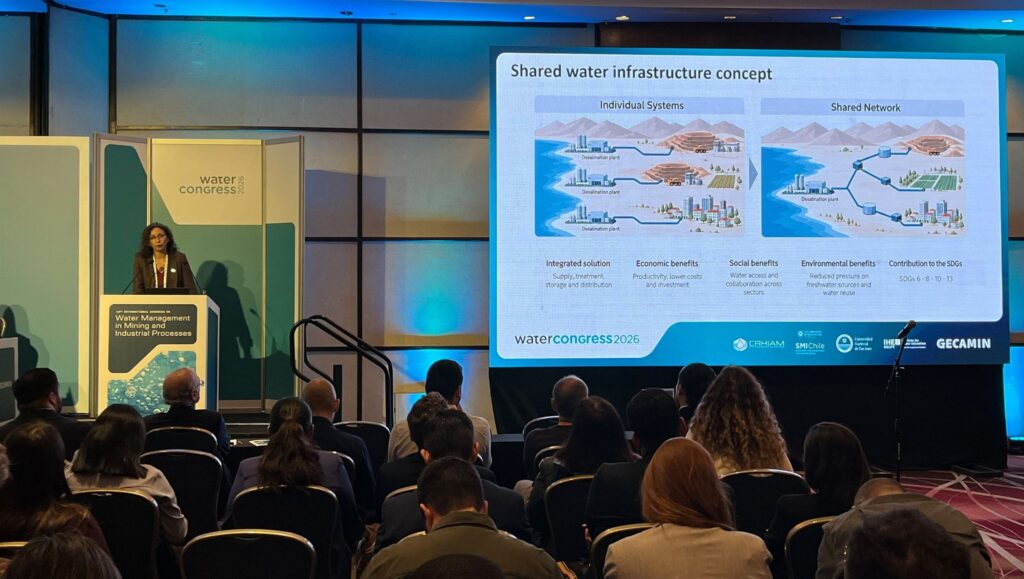
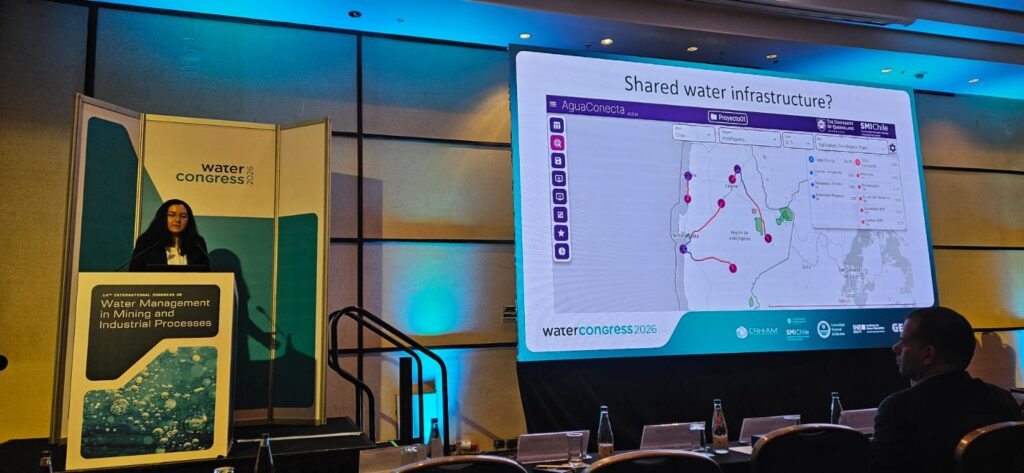
Researcher Yendery Ramírez presented a paper entitled “Integrated Water Infrastructure: Mining Efficiency and Regional Benefits”, outlining the advantages of planning shared water infrastructure serving multiple users, as opposed to a system based on individual supply arrangements designed to meet each user’s needs separately.
Yendery explained how the AguaConecta integrated water management tool could be applied to a hypothetical case study in Antofagasta. This methodology has been validated through several projects undertaken by the SMI Chile team in recent years. It combines territorial data, mathematical and geospatial optimisation, and economic and socio-environmental assessment, with the aim of helping users manage water resources more efficiently from economic, social and environmental perspectives.
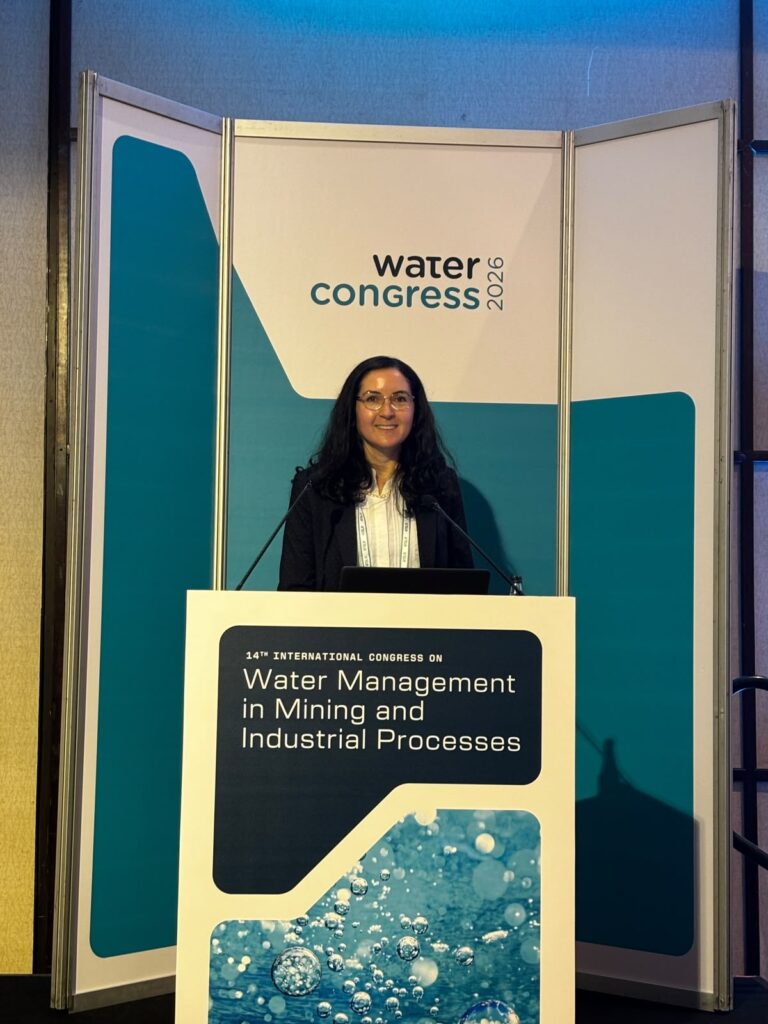
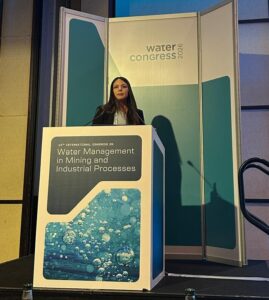
SMI Chile’s Social Performance and Resource Governance team was represented by Bárbara Stubing, who presented “Collaborative Governance and Multi-stakeholder Platforms: Contributions to Water Governance in Chile”.
Bárbara presented progress on her research into collaborative governance and multi-stakeholder dialogue on socio-water issues. Drawing on the experience of the Strategic Water Resources Roundtable for a river basin in northern Chile, she shared lessons learned and challenges relating to stakeholder engagement and the building of agreements for resource management within local territories.
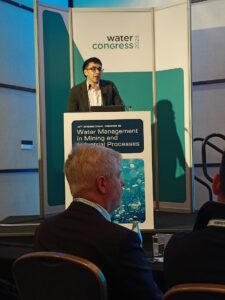
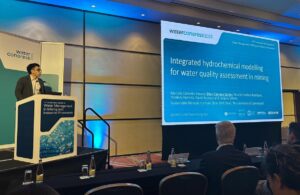
Dilan Campos, from the Environmental Rehabilitation and Ecosystem Dynamics team, presented a paper entitled “Integrated Hydrogeochemical Modelling for the Assessment of Water Quality in Mining”.
In another technical session, Nathalie Jamett presented a paper alongside Álvaro Hernández, Water Management and Strategy Consultant at Paillahuinte CRH, entitled “Shared Water Infrastructure as an Enabler for the Implementation of Law No. 21,813 in Chile”.
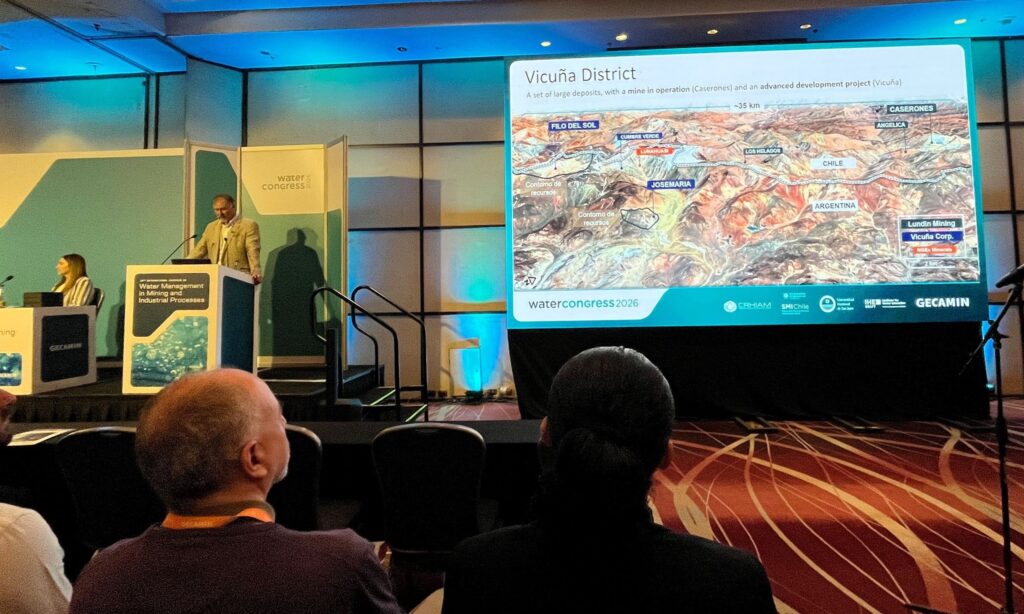
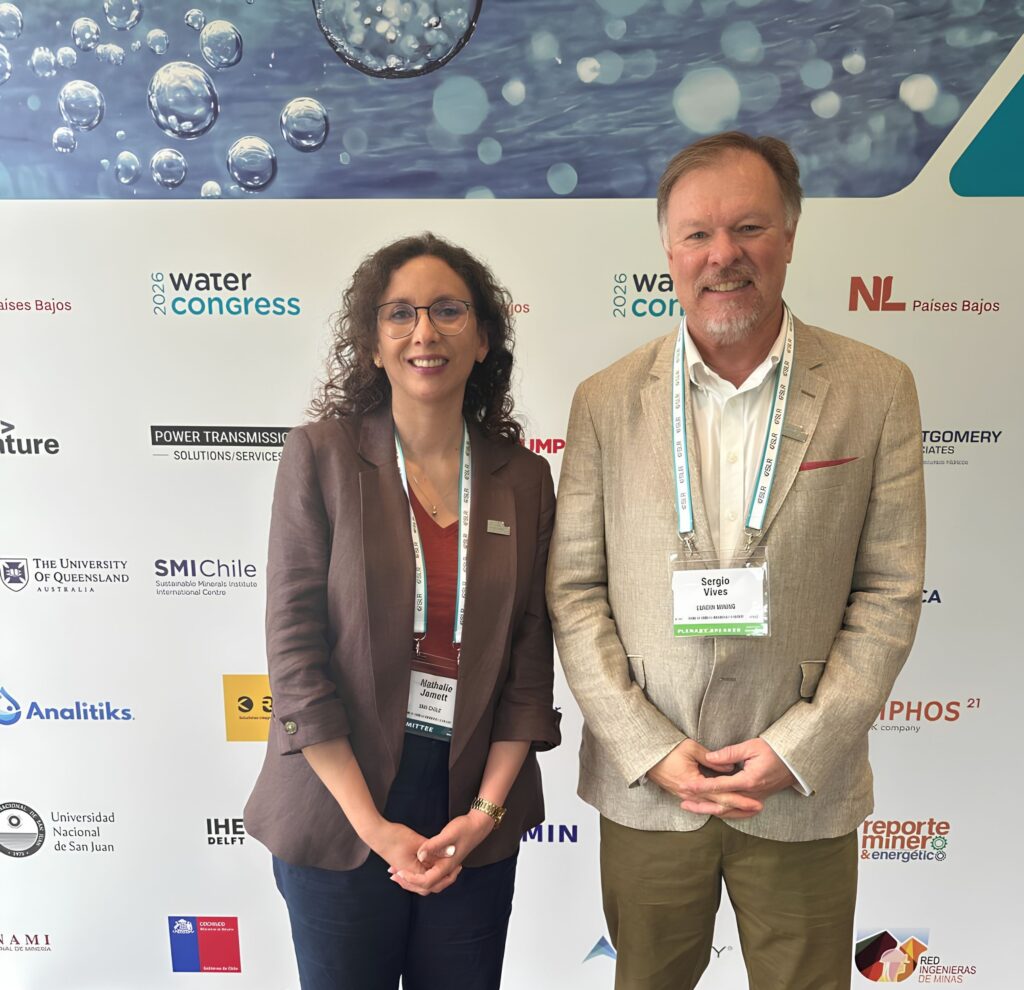
At the close of Water Congress 2026, Nathalie Jamett and Sergio Vives, Corporate Director of Environment, Permits and External Affairs at Lundin Mining Chile, jointly presented the opportunities and challenges that shared water infrastructure offers for mining development in the Atacama Region. Their presentation was entitled “Water, Mining and Regional Development: Towards Shared and Resilient Water Networks”.