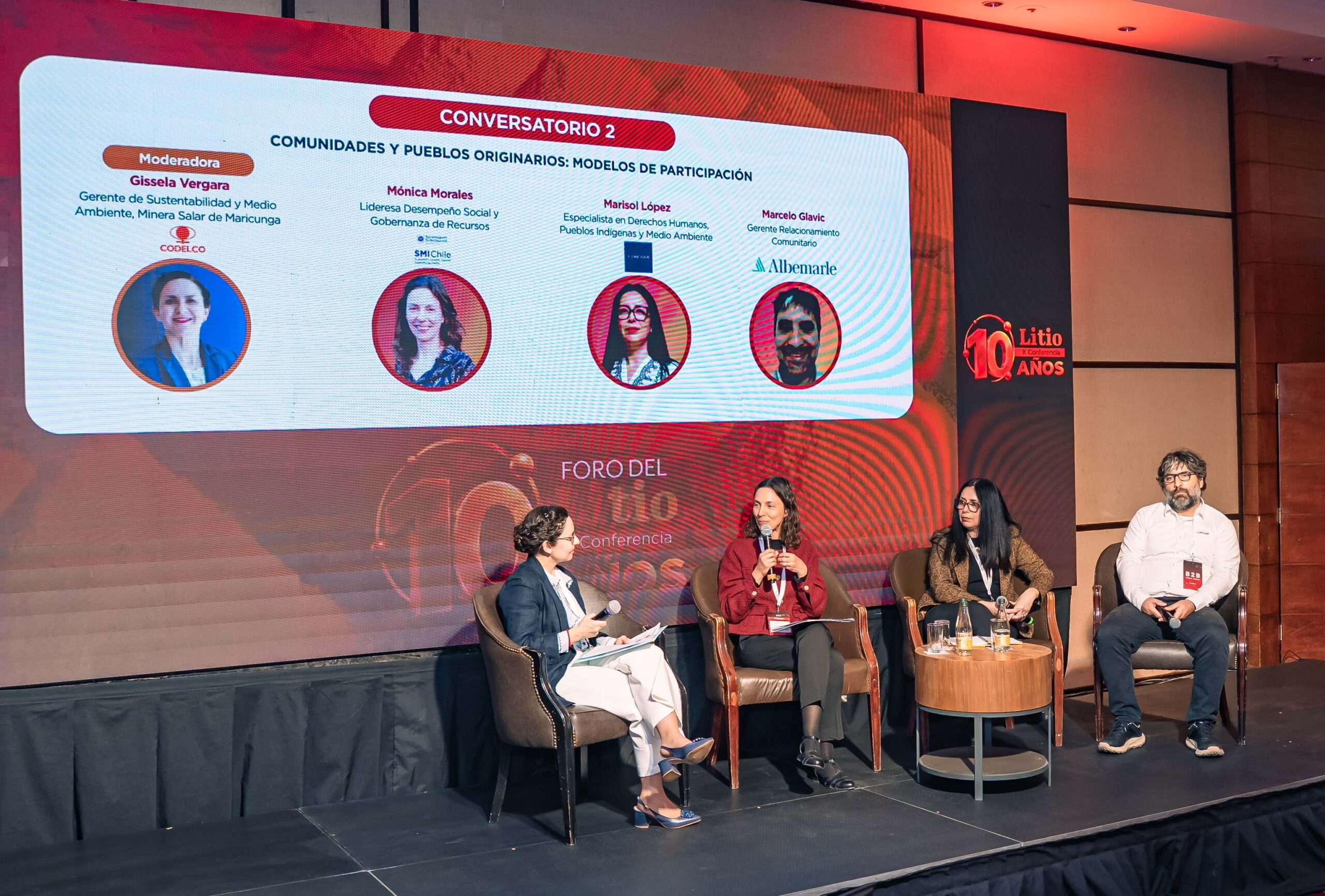
The lead researcher of SMI Chile’s Social Performance and Resource Governance team addressed the key public policy challenges surrounding participation mechanisms related to lithium governance.
Her participation took place during the panel discussion “Indigenous Communities and Peoples: Participation Models” at Lithium Forum 2026, which examined participation and benefit-sharing mechanisms associated with currently approved Special Lithium Operation Contracts (CEOLs), as well as models to promote transparency, dialogue and long-term monitoring of commitments.
Mónica Morales took part in the discussion alongside Gissela Vergara, Sustainability and Environment Manager at Minera Salar de Maricunga, a Codelco subsidiary; Marisol López, a lawyer specialising in human rights and Indigenous peoples at Licancabur Consultora; and Marcelo Glavic, Community Relations Manager at Albemarle.
Mónica Morales’ contribution focused on the need for a territorial and intergenerational perspective to strengthen lithium public policy.
“Lithium projects generate economic, employment and social expectations, but they also raise environmental and territorial concerns. Public policy must establish the foundations for managing this diversity in pursuit of the common good,” she explained.
The SMI Chile team she leads has worked closely on the relationship between communities and the lithium industry, evaluating and supporting communities over four years in the implementation of mutual benefit agreements. In 2025, with funding from the Inter-American Development Bank (IDB), the team also worked with the Ministry of Mining on the implementation of the National Lithium Strategy, supporting the methodology for the ongoing dialogue process and developing a guide for implementing the CEOL governance committee.
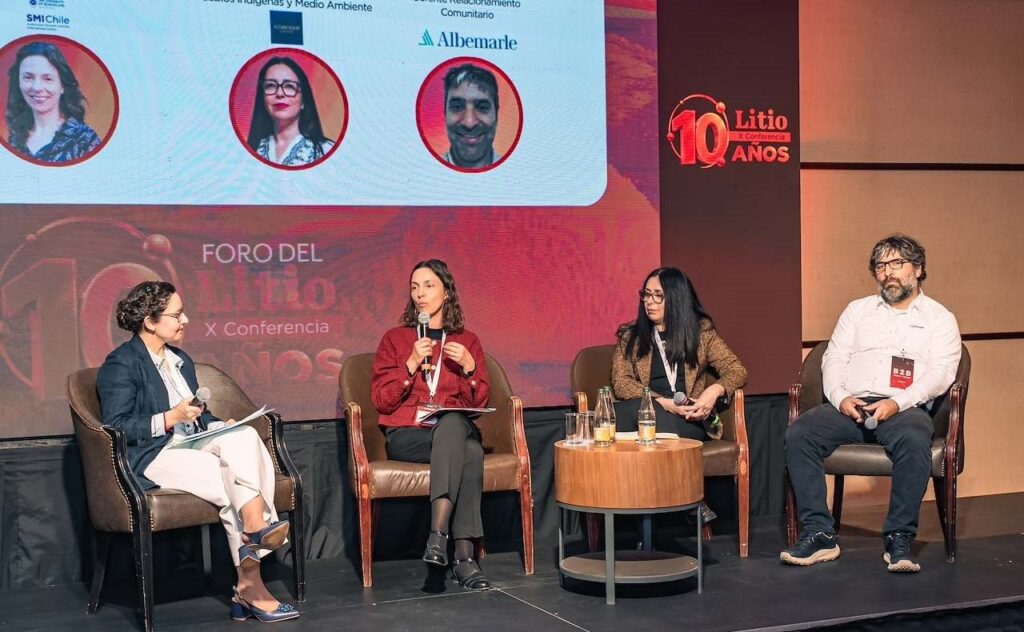
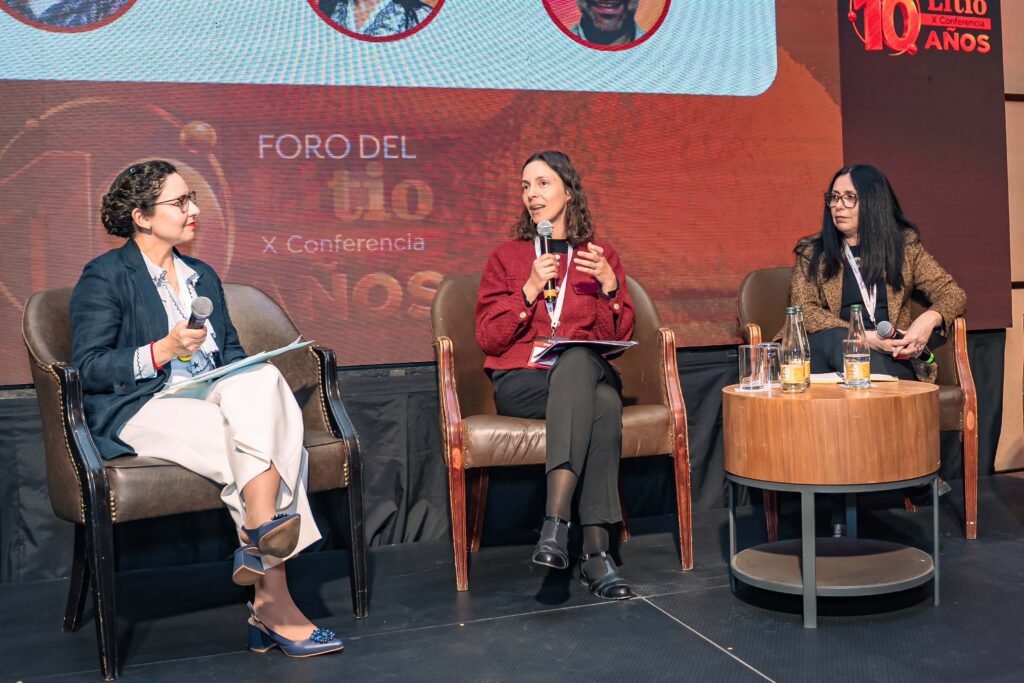
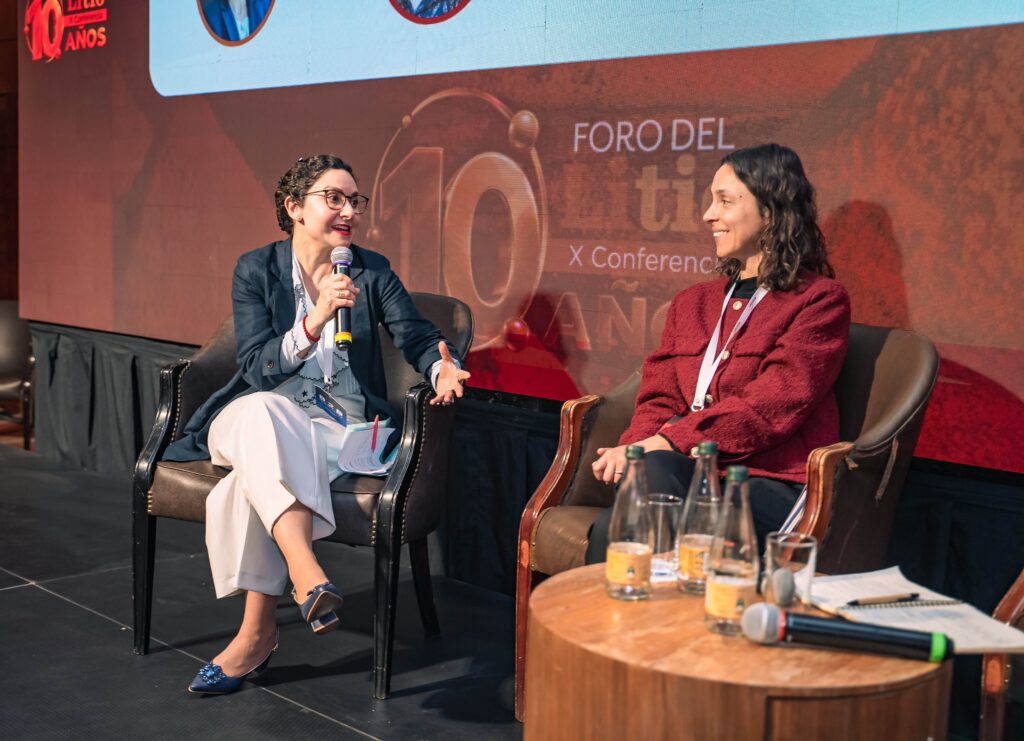
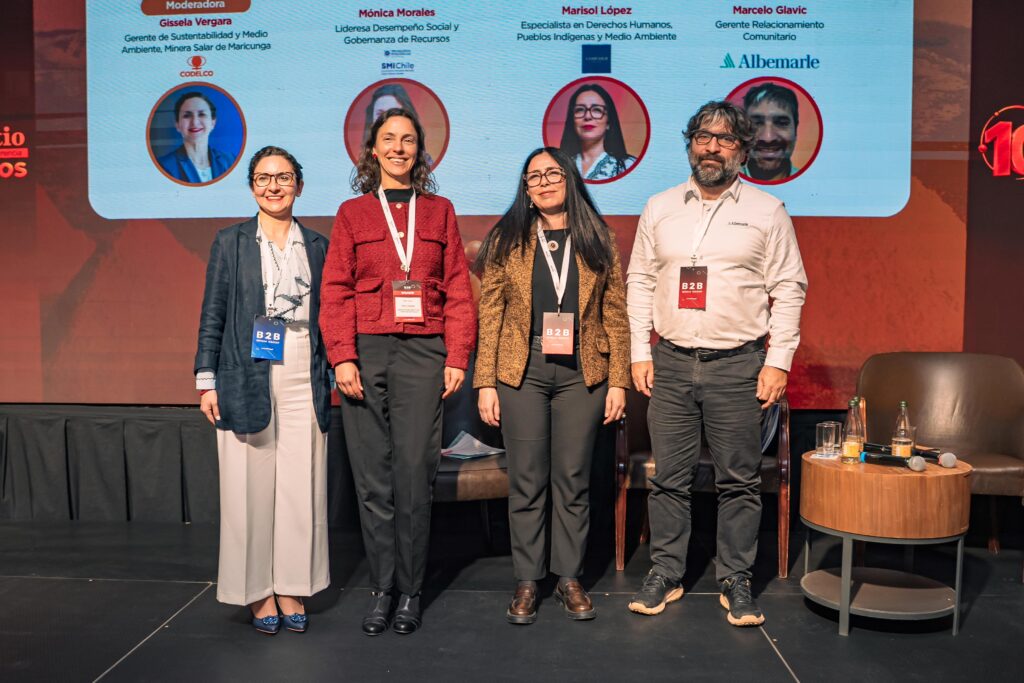
Mónica Morales highlighted the progress made through the CEOLs in incorporating key dimensions for Indigenous communities, including governance, cultural heritage protection, respect for ancestral uses and participatory monitoring. “However, we now need to move from a project-centred approach towards a territorial perspective that supports a shared understanding of common challenges, governance and collective action,” she cautioned.
Regarding participation, she warned of the risk of fragmenting dialogue and decision-making when multiple processes are approached from the perspective of individual projects rather than the territory as a whole.
“The challenge of the common good remains, with a public policy that promotes a territorial perspective,” she explained. “Today, we see impoverished territories coexisting with mining projects because there is no coordination or consensus on how to understand the territory and coordinate efforts for its development. The territory becomes an open space where different actions take place that do not necessarily connect with one another. The solution lies in coordinating the efforts of government, companies and communities, looking at the territory as a whole rather than treating each project as an island.”
Another central theme of the discussion was the need for a long-term perspective. “If the results of decisions materialise many years later, we need to consider how to maintain the legitimacy and motivation for participation,” Mónica said. “With new lithium projects, the decisions we make today will determine what future generations receive. So, what is the reward for participating today? This requires us to incorporate an intergenerational perspective,” she concluded.
Lithium Forum 2026 was organised by iMercados – B2B Media Group, together with Revista Minería Chilena.