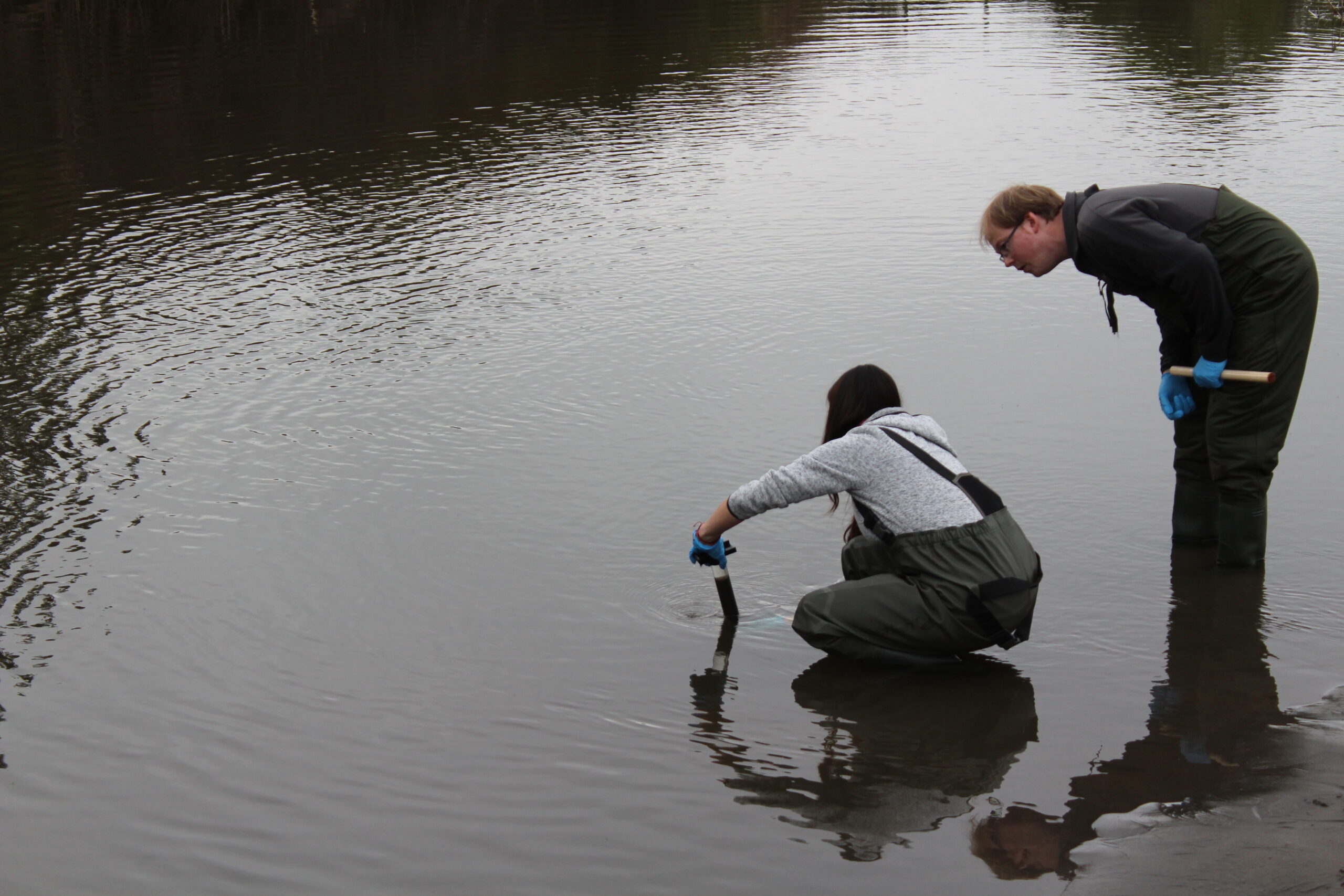
In the context of the international SUMIT 0 project, a multidisciplinary team visited this area to take samples of plants, water and sediments that will be analysed at the University of Edinburgh.
The SUMIT 0 project—SUstainable MIning for a resilient Transition to Net Zero—aims to create an international network of experts to develop and promote smart mining in environmental and climate terms, to reduce the impacts of mining activities on our environment and improve vulnerable communities’ quality of life.
This work is developed by SMI-ICE-Chile in collaboration with The University of Queensland, The University of Edinburgh, and the Centre for Research in Technologies for Society (C+) of the Universidad del Desarrollo School of Engineering (with funding from the Natural Environment Research Council, NERC, of the United Kingdom).
This exploration and sampling campaign coincided with the visit of Dr. James Watt, an environmental scientist from the University of Edinburgh with extensive experience in the biogeochemical cycles of aquatic systems.
James Watt is a Professor of Environmental Sciences at the School of Geosciences at The University of Edinburgh and currently focuses his research on quantifying the interactions between the environment and chemical contaminants, including phosphorus, arsenic and vanadium, as well as their impacts on biological communities and water quality.
Professor Watt was joined by Dr. David Rubinos (Leader of the SUMIT0 Project in Chile), Dr. Felipe Saavedra, Dilan Campos and, from the UDD Research Centre in Technologies for Society (C+), researcher Macarena Troncoso.
The team of researchers carried out in situ measurements of various physicochemical parameters and took numerous samples of plants, water and sediments from the wetland, which were subsequently processed in the laboratories of the Centre for Research in Technologies for Society (C+), and then flown to the geosciences laboratory at the University of Edinburgh, where they will be analyzed.
“The activity,” explains David Rubinos, “is key to deepening our knowledge of the biogeochemical cycles of potentially toxic elements and their associated impacts on wetlands affected by mining activity, both in Chile and globally, with the ultimate goal of developing solutions to rehabilitate them.”