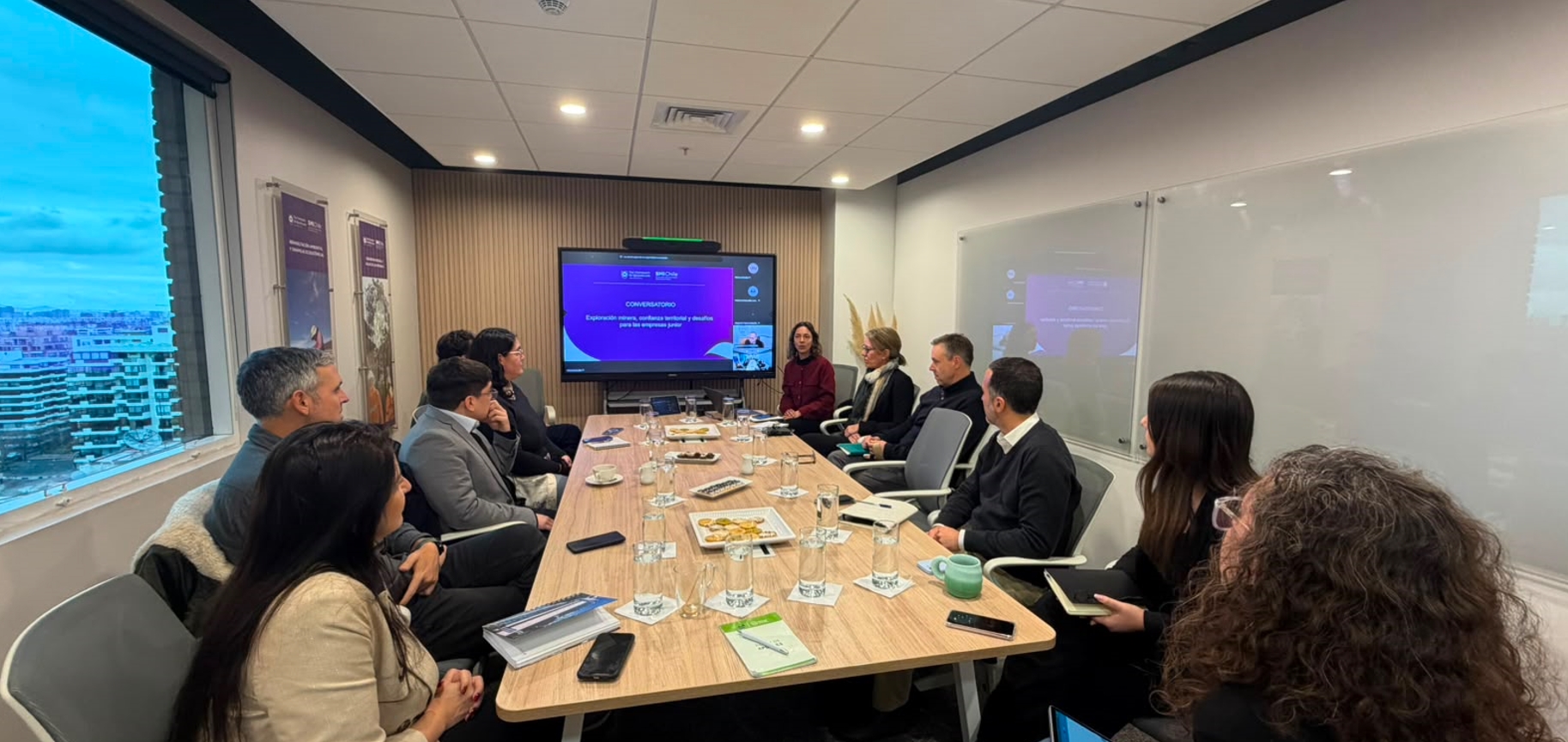
The meeting took place during the visit to Chile of Sarah Mackenzie, a University of Queensland expert in social responsibility in mining and aimed to foster discussion on the global context of mineral exploration and the challenges facing the sector amid growing territorial, social and environmental complexity.
The meeting took place during the visit to Chile of Sarah Mackenzie, a University of Queensland expert in social responsibility in mining and aimed to foster discussion on the global context of mineral exploration and the challenges facing the sector amid growing territorial, social and environmental complexity.
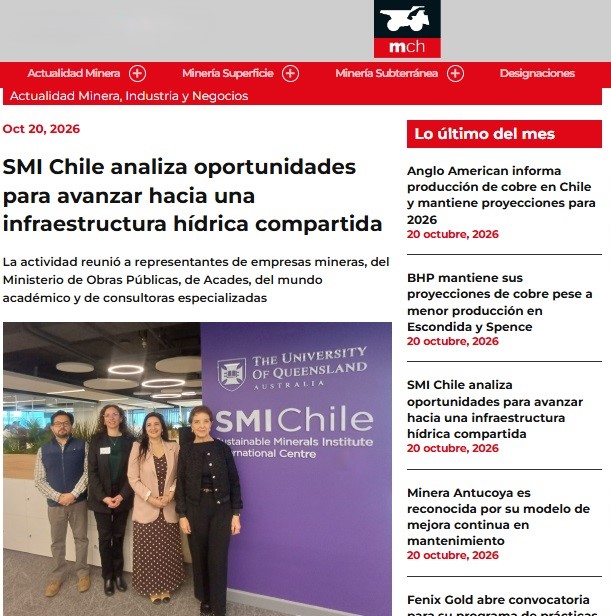
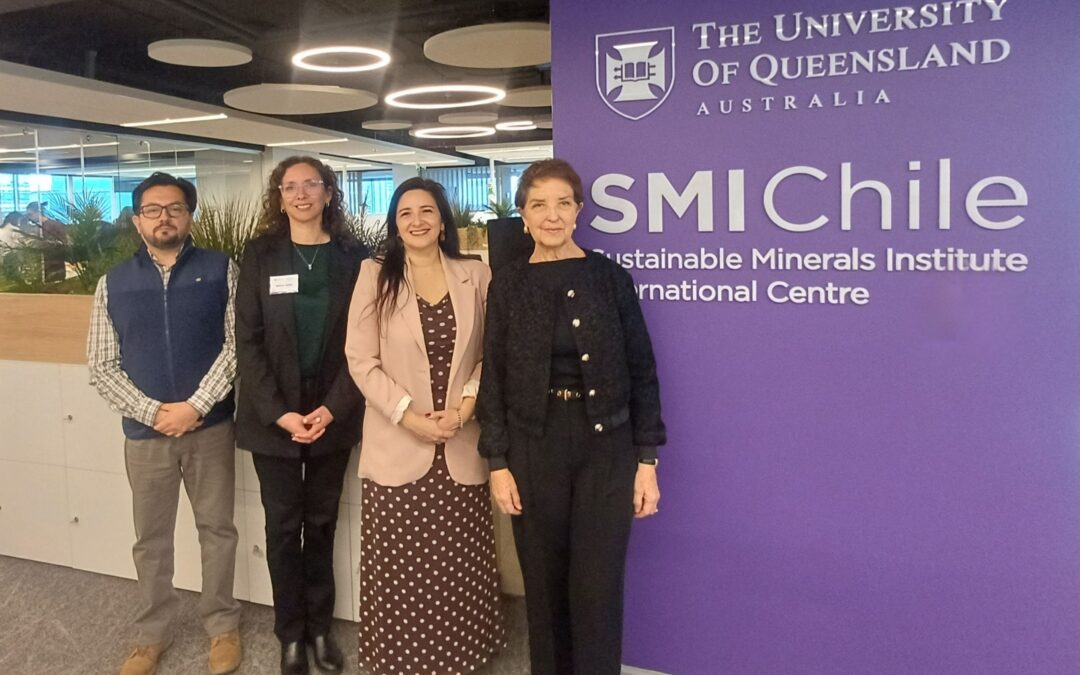
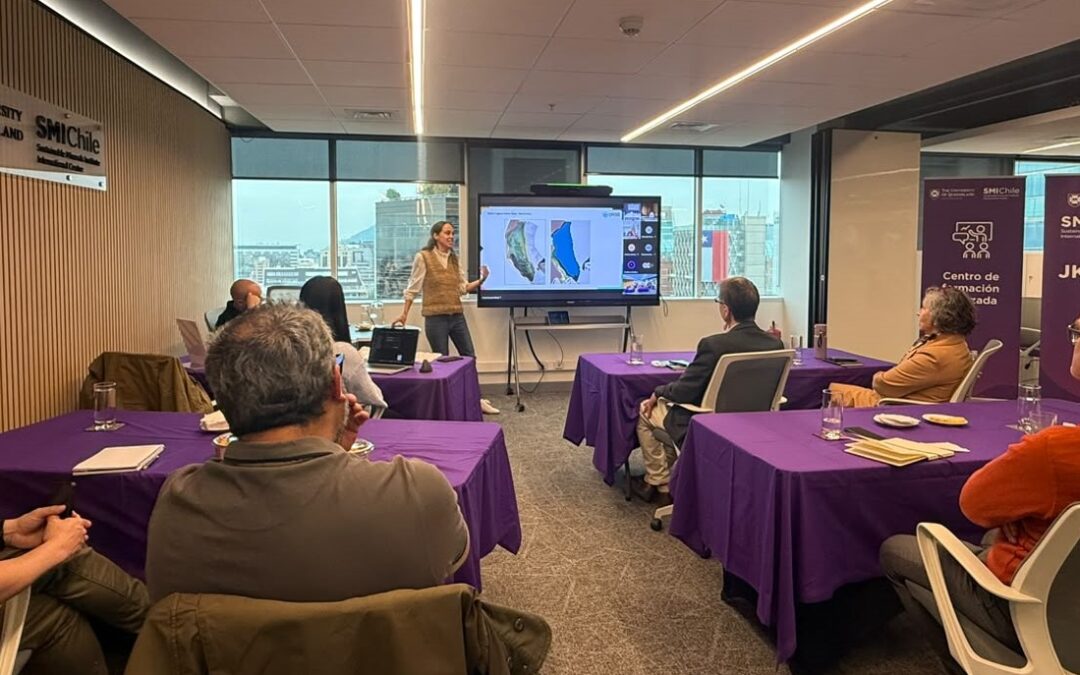
The roundtable, entitled “Mineral Exploration, Territorial Trust and Challenges for Junior Mining Companies”, featured Sarah Mackenzie, Senior Manager, Research and Knowledge Transfer at the Centre for Social Responsibility in Mining, Sustainable Minerals Institute, The University of Queensland. The event was co-organised by SMI Chile’s Social Performance and Resource Governance team and Marcela Sepúlveda, a consultant specialising in social performance and territorial intelligence with extensive experience in the Atacama Region.
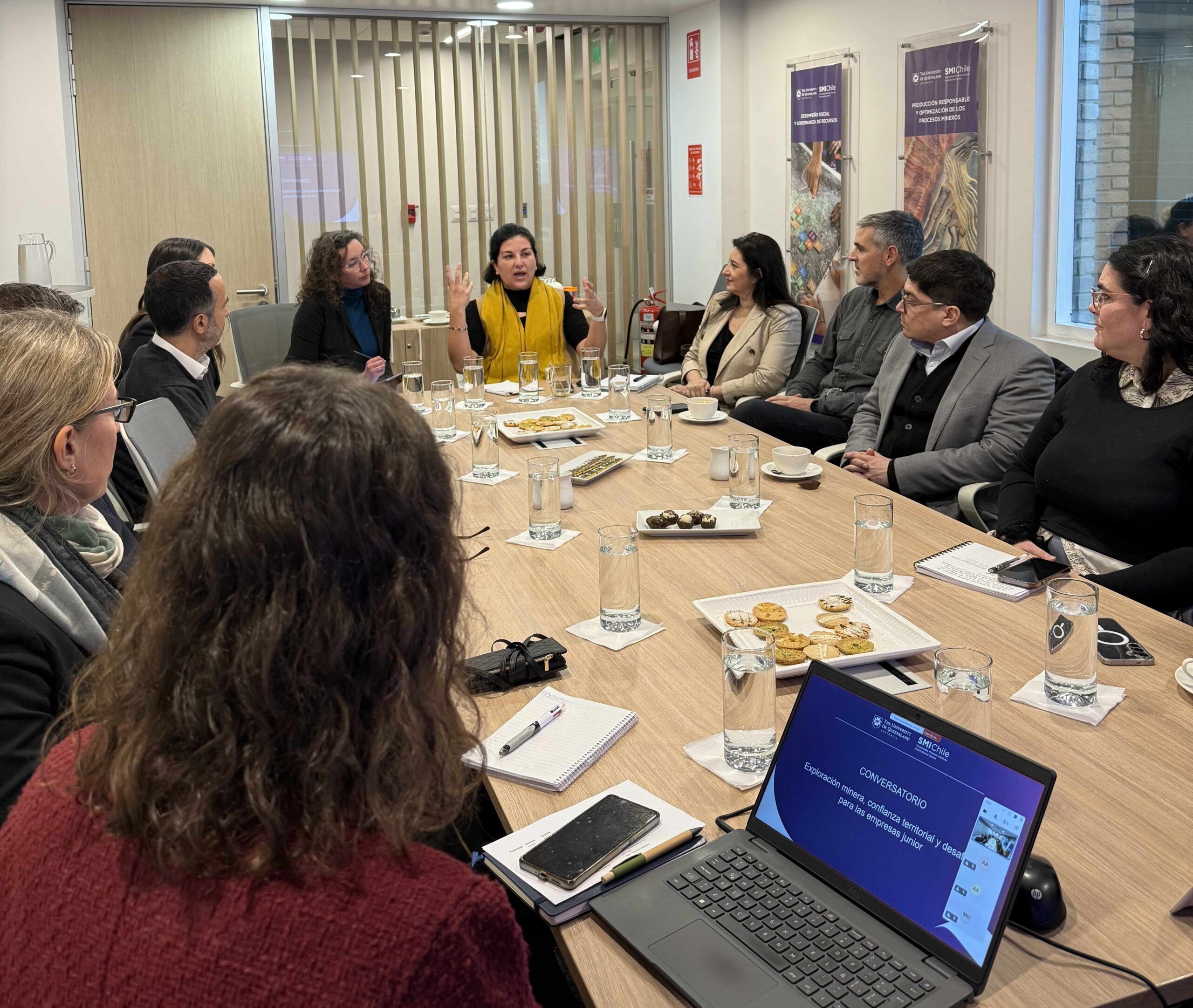
Focused on the Atacama Region, the event brought together representatives from Atex Resources, Kura Minerals, Cleantech Lithium, TECO Group, Flagship and Hot Chili Limited, as well as CORPROA and the Centre for Governance at the University of Atacama.
“The purpose of this roundtable reflects our commitment to thinking about mining from a territorial perspective rather than focusing solely on individual projects,” explained Mónica Morales, who leads the Social Performance and Resource Governance team at SMI Chile. “Today, junior mining companies and newer entrants seeking to develop projects in the Atacama Region need to understand the territory in all its complexity. Through forums like this, it is possible to identify synergies, coordinate efforts and, most importantly, foster meaningful multi-stakeholder collaboration.”
The Atacama Region has a long mining history, where small-, medium- and large-scale mining coexist alongside a rich natural and cultural heritage. It is a territory where the industry’s historical practices have shaped the trust of local stakeholders, and where the Regional Government is currently implementing its Regional Development Strategy (ERDA) 2024–2034, a framework that mining companies need to consider in order to align their activities with the region’s long-term development priorities.
“For any company entering the Atacama Region, it is essential to understand the territory before the territory comes to know the company. Gaining an understanding of its history, stakeholders and expectations helps anticipate risks and build more consistent, long-term relationships,” said Marcela Sepúlveda, co-organiser of the event. “The key is to move towards an effective territorial approach based on genuine collaboration and meaningful dialogue.”
Sarah Mackenzie also noted that, despite technological advances and the growing use of artificial intelligence to improve the efficiency of exploration programmes, the exploration phase is taking increasingly longer, largely due to social, environmental and permitting factors. “That is why,” the UQ expert emphasised, “it is essential to manage both impacts and opportunities through an approach informed by social data and meaningful community engagement.”
The discussion highlighted several key themes, including the need to move beyond traditional community relations towards a broader territorial approach that promotes collaboration among stakeholders; the strategic importance of the exploration phase, with its associated need for early, transparent and accessible engagement and communication; and the importance of planning for a long-term presence within the territory.
Participants also discussed several emerging trends affecting junior mining companies, including the need to strengthen their ESG capabilities and teams in order to operate effectively in a context shaped by the long-standing relationship between mining and local communities.