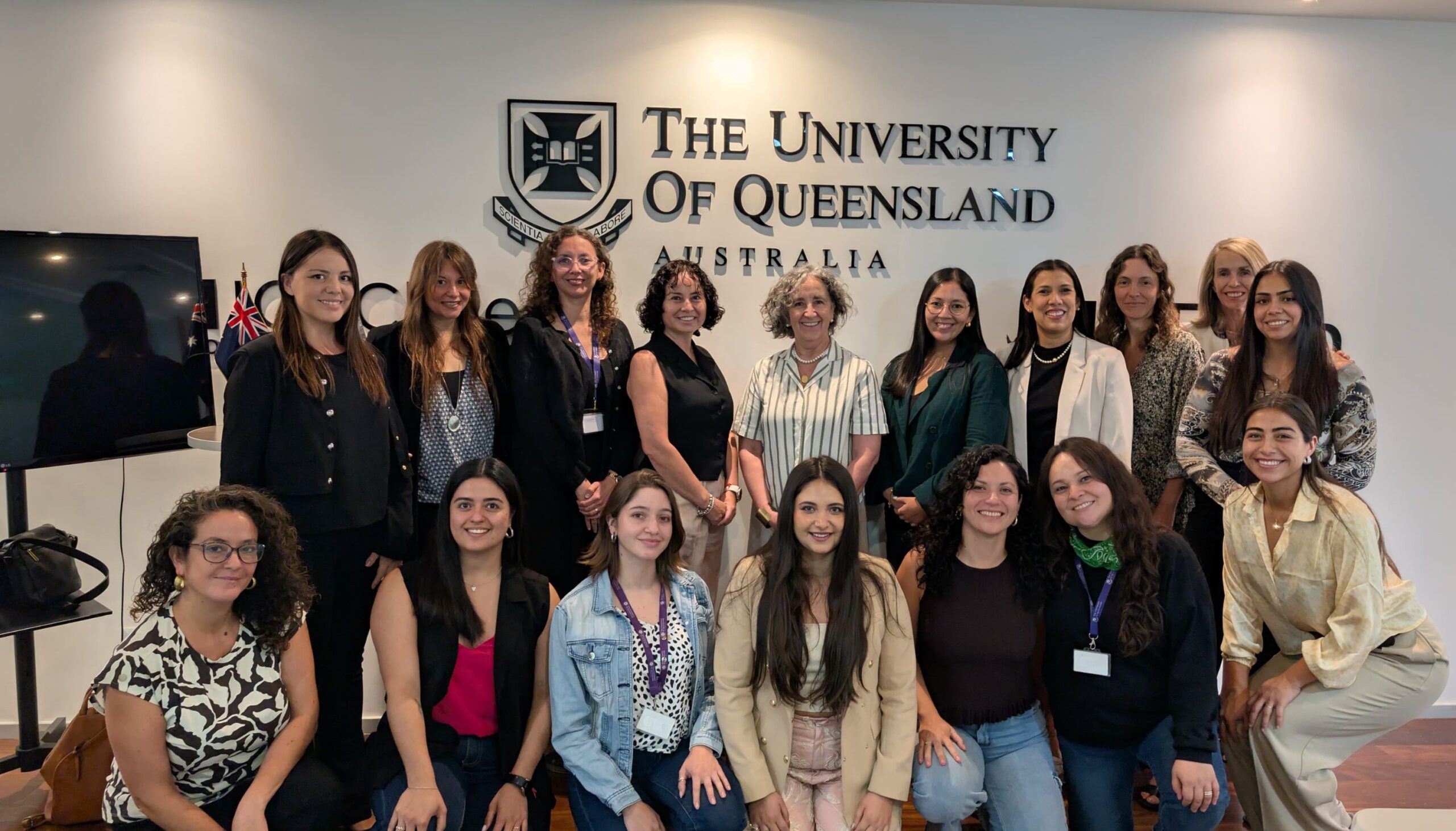
Following the presentation of a study on the main barriers limiting women’s development in research, leading representatives from Chile’s scientific ecosystem discussed the key challenges and priorities for advancing gender equity.
The discussion, coordinated by Camila Cabrera, researcher at SMI Chile, brought together prominent representatives from the national scientific community: Verónica Figueroa Huencho, public administrator, Associate Professor at the Institute of Public Affairs at the University of Chile and PhD in Administrative Sciences; Nadia Mery, professor and researcher at the Department of Mining Engineering of the Faculty of Physical and Mathematical Sciences at the University of Chile; Teresa Ropert, professor at the School of Psychology at Universidad Adolfo Ibáñez; Andreina García, PhD in Chemistry and chemical engineer specialising in Environmental Sciences and researcher at the Advanced Mining Technology Center (AMTC) at the University of Chile; and Julietta Zamora, a senior geologist with more than 22 years of experience in mineral exploration and mining operations, specialising in base metals and critical minerals such as copper and lithium, and currently an academic and researcher in Geology at Universidad del Desarrollo.

Verónica Figueroa Huencho.

Andreina García, Teresa Ropert y Nadia Mery.
The Deputy Head of Mission at the Australian Embassy in Chile, Chung-Linh Chau, also attended the event.
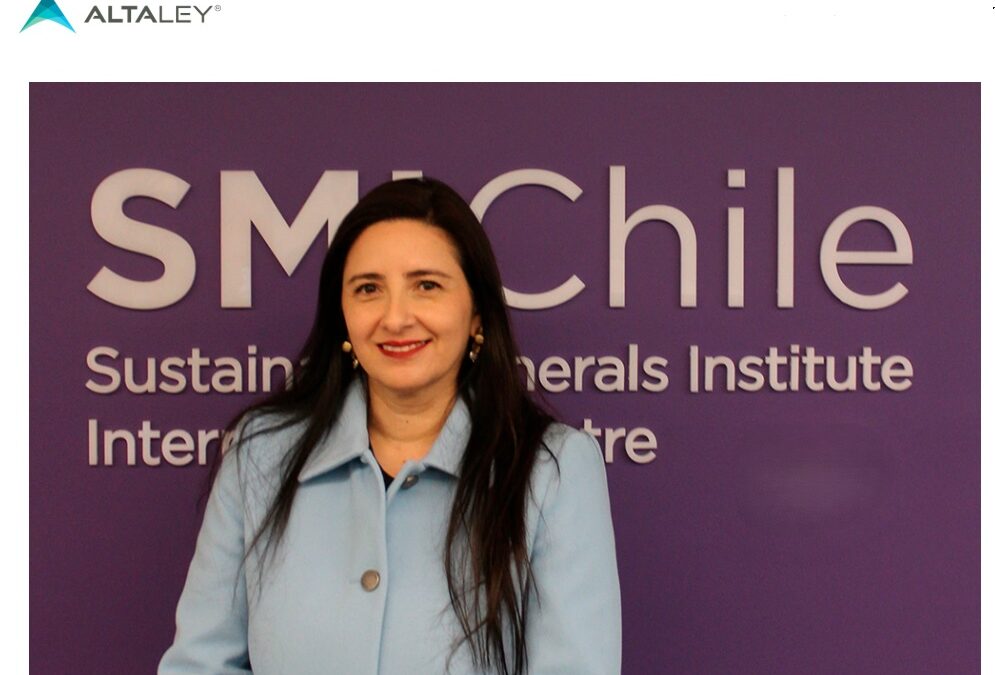
Francisca Rivero, General Manager and Interim Executive Director of SMI Chile, opened the discussion by highlighting the role of science and of women in building a better world. “We do not do science by chance,” she said. “We do it with the purpose of transforming the world for the better, a role that women have played throughout history. This is how the generations that came before us – our mothers and grandmothers – made their contributions. Today the challenges are different, but the world still needs scientific evidence to improve people’s lives. On this International Women’s Day, we want to discuss gender gaps in Chile’s research ecosystem, a priority challenge for SMI Chile, and one to which we also invite our male colleagues to contribute.”
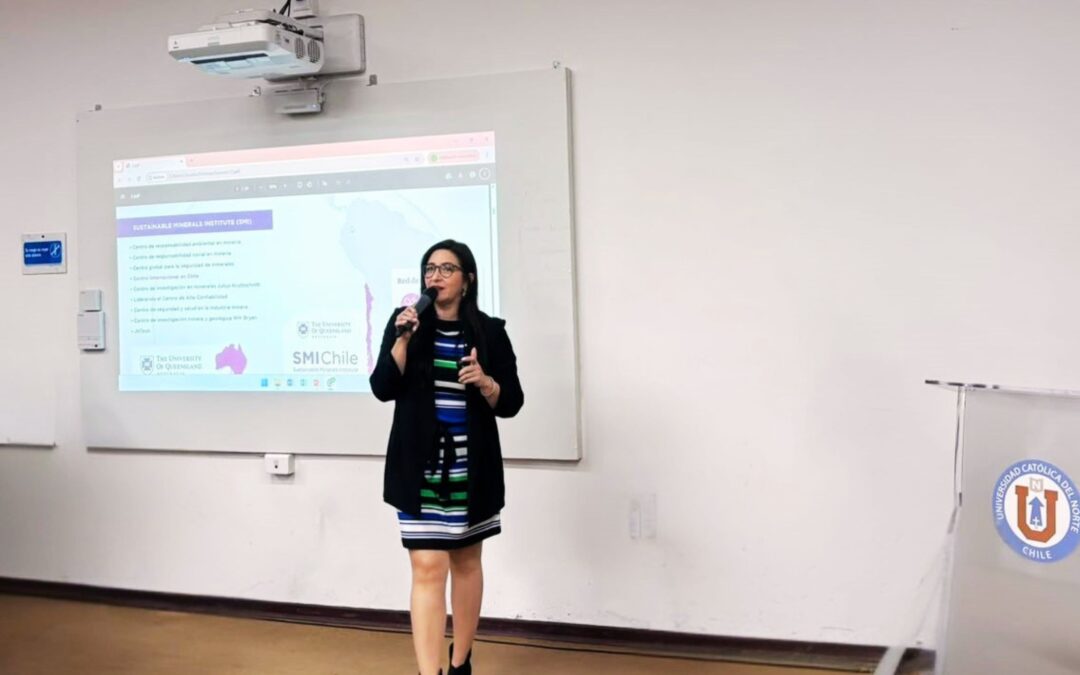
Verónica Figueroa Huencho then presented a recent study by the Vice-Rectorate for Research and Development at the University of Chile entitled Towards overcoming gender gaps in research: collaborative proposals from the academic and scientific ecosystem (Araya, N.; Reyes, A.; Rauld, J.; Bawarshi, G.; Silva, E., 2025).
During her presentation, Figueroa reviewed the main indicators of gender gaps in research. While noting that these gaps have gradually narrowed over time, she pointed out that women still represent only 35% of researchers in the country, facing barriers such as discrimination, disciplinary segregation and difficulties in accessing leadership and decision-making positions.
She also explained that while women account for 55.4% of undergraduate enrolment, their representation drops to 42.5% in doctoral programmes, where only 38% ultimately graduate.
The gap, she noted, is particularly pronounced in science, technology, engineering and mathematics (STEM) fields, where women represent only 29.7% of undergraduate enrolments, 29% at master’s level and 35.9% at doctoral level.
These gender gaps, she added, are also evident, to varying degrees, in career progression, salaries, scientific publications and patent registrations.
The study also outlines a series of proposals to help close these gaps. Among them is the need to address the so-called “leaky pipeline” – understood as the declining participation of women as academic careers progress – through greater social co-responsibility for care. This includes promoting care policies and services, flexible working arrangements and equal parental leave, so that studying, working and caregiving responsibilities do not become mutually exclusive.
The report also proposes allocating dedicated funding, adjusting productivity indicators and expanding funding calls that help make women’s leadership in research more visible and sustainable.
Julietta Zamora shared some reflections on her professional trajectory as a geologist in large-scale mining, noting that women working in the industry sometimes feel compelled to imitate traditionally male leadership styles in order to gain validation. “That happened to me at the beginning, and I soon realised it was a mistake. It was far more effective to lead from my own identity,” she commented.
Teresa Ropert highlighted the importance of collaborative approaches as a foundational principle in the way science is conducted in order to help close these gaps. “For example, one could think about recognising not only the first and second authors of an academic paper, but the entire research team, given that it is often women who develop the collaborative strategies among colleagues that help manage time more effectively,” she said.
She also called for moving away from the notion that men are responsible for providing and women for caring, towards a framework of shared responsibility. “This must also be reflected in legislation that helps dismantle these gender gaps, as the variable of so-called ‘time poverty’ is central to the aspiration for greater gender equity.”
Along similar lines, Nadia Mery and Andreina García spoke about the difficulties and opportunities they encountered throughout their scientific careers, including the trade-offs associated with periods of motherhood, encouraging women not to place barriers on their own scientific trajectories.

Nathalie Jamett, Julietta Zamora y Andreina García.

Francisca Rivero y Verónica Figueroa Huencho.

La vice embajadora de Australia en Chile, Chung-Linh Chau, junto a Francisca Rivero, gerenta general y directora ejecutiva (i) de SMI Chile.