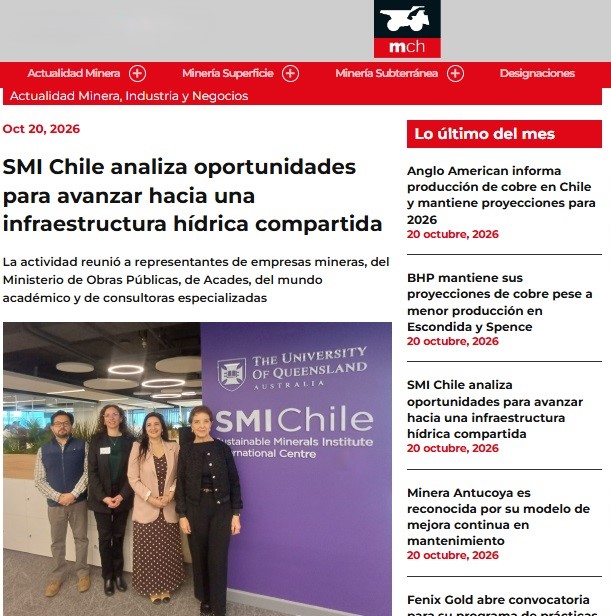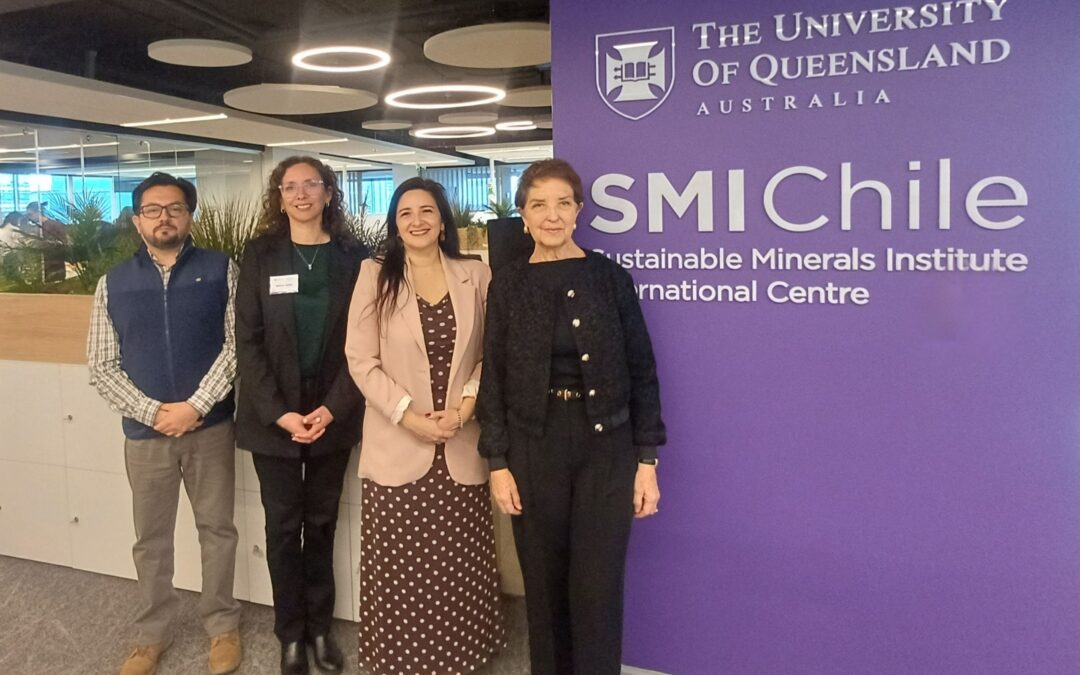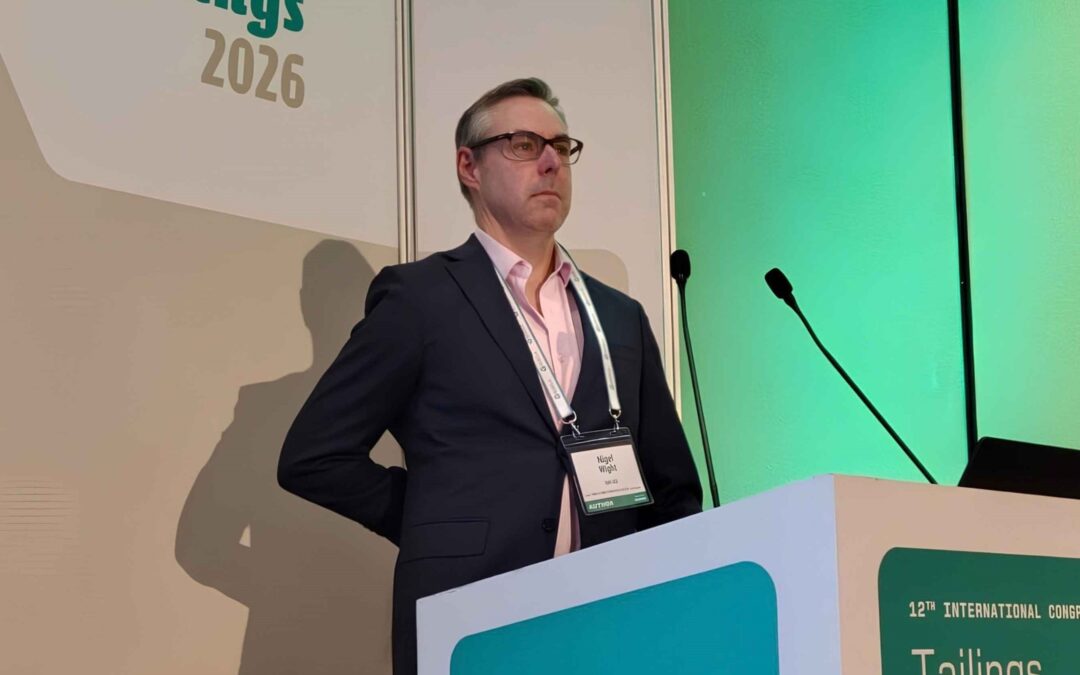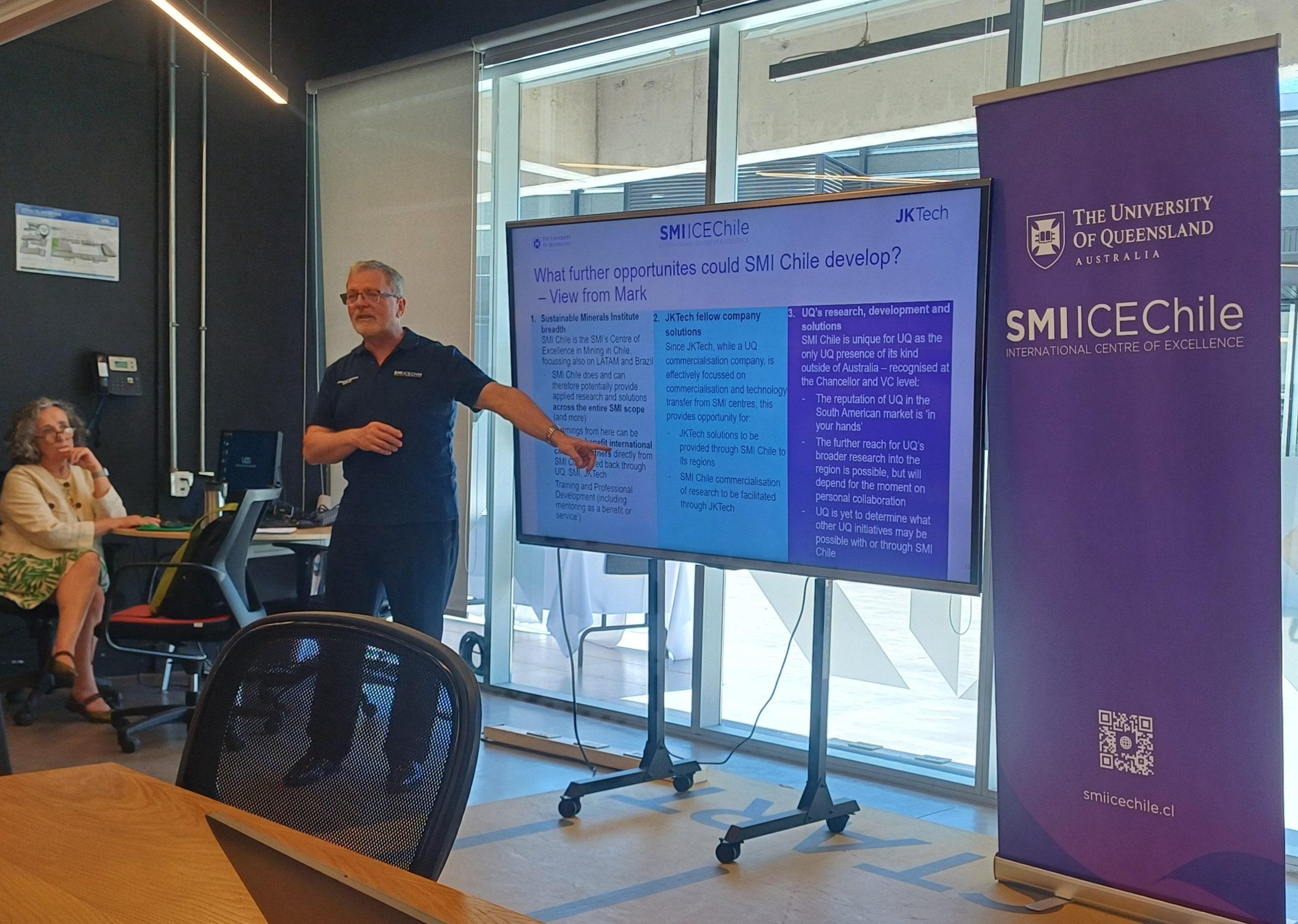
In a spirit of optimism, following the significant achievements attained during 2025, the teams that make up our Centre gathered at the facilities of Universidad del Desarrollo to take stock of past progress and define strategic objectives in a context that presents major opportunities.
The meeting was opened by Doug Aitken, in his role as outgoing Executive Director, as he prepares to relocate to Brisbane, Australia, where he will take up the position of inaugural Director of the Centre for Environmental Responsibility in Mining (CERM) at the Sustainable Minerals Institute (SMI), University of Queensland.
In his address, the former Executive Director of SMI-ICE-Chile delivered a comprehensive overview of the Centre’s key milestones and figures to date, with particular emphasis on the positive results achieved during 2025. He highlighted the significance of the moment the Centre is currently experiencing.
“We are in a period of transition, leaving behind ANID funding and entering a new phase of financial self-sustainability, where we now have tangible results on which to build the future… 29 projects completed, a further 24 under way, and 66 strategic partners.”
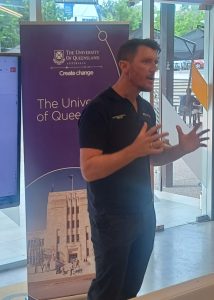
Doug Aitken speaks at the event, just before traveling to Brisbane, Australia, to take over as director of the CERM at the Sustainable Minerals Institute, UQ.
His review traced the Centre’s early years, described as a “fragile beginning” between 2013 and 2017, when the risk of closure was a constant concern. He then reflected on the period 2018–2019, which marked the first steps in engagement with industry and the emergence of CORFO funding as a turning point.
“At that time, our team grew to 20 people, and our first projects—with different divisions of Codelco, M.C. Inversiones and SQM—proved decisive,” he explained. “This enabled us to strengthen and consolidate our capabilities and positioning in environmental, social and water management matters.”
However, he recalled that despite this growth and the availability of ANID funding, until early 2025 there was still no certainty that the Centre could achieve financial self-sufficiency. Indeed, several other international centres were forced to cease operations in Chile.
“The real turning point,” he noted, “came in 2025, when the innovation agreement with Codelco and other large-scale projects with major mining companies —such as BHP, AMSA, Teck and Lundin Mining, among others— opened the door to financial self-sustainability, a challenge that until recently seemed almost unattainable.”
“We still face many challenges and areas for improvement; however, today the industry seeks us out for our capabilities in critical areas such as water and environmental management, climate change, social value, prevention of acid mine drainage, mine closure and ecosystem conservation,” said Doug Aitken. “In addition, we have experienced sustained growth in our training offerings across a range of mining-related safety, environmental and sustainability topics. This demonstrates how we are generating a real impact on the sustainability of the mining industry.
“We have achieved something remarkable,” he added, “which I will continue to support from my new position in Australia and in my ongoing role on the SMI-Chile Board. I am confident that, together, we can generate even greater positive impact.”
Patricio Viguera, Manager of Administration, Finance and People Development, then presented a detailed analysis of the Centre’s financial performance during 2025, highlighting that revenues nearly doubled compared to 2023.
“In addition, we moved from 22 projects in 2023 to an estimated 47 project proposals for 2026,” he noted.
Today, the Centre has a team of 45 staff members, including 23 professionals; 11 hold a master’s degree and a further 11 hold a PhD.
Following presentations by each area of the Centre outlining their main achievements and challenges in 2025, Francisca Rivero—General Manager and Interim Executive Director—presented the strategic objectives for 2026.
“SMI-ICE-Chile is now a recognised leader in sustainability and innovation within the national mining industry and across Latin America,” she emphasised. “Nevertheless, we face the challenge of increasing our impact, both nationally and regionally.”
Francisca Rivero, current general manager and interim executive director of the Centre.
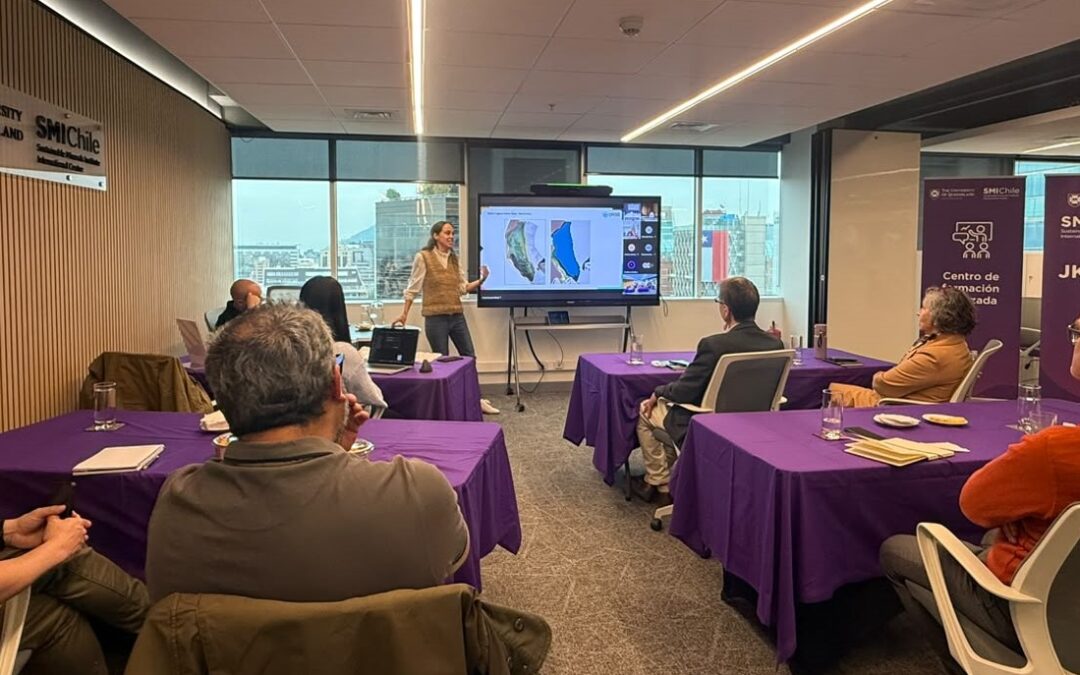
Over the course of the two-day retreat, Centre teams worked on proposals to address both immediate and future challenges.
The event concluded with a presentation by Professor Mark Noppé, Director of JKTech Pty Ltd, who, representing the Sustainable Minerals Institute (SMI) at The University of Queensland, spoke about the roles of SMI and JKTech and how collaboration with both organisations can further strengthen the capabilities of SMI-Chile in providing impactful research-supported solutions to industry, governments and communities.
Founded in 1986 under the auspices of The University of Queensland as a not-for-profit organisation, JKTech currently reinvests its profits to support research, education and student development.
“We achieve this by commercialising innovative research solutions for the global mining industry,” explained Mark Noppé. “Our purpose is to translate research to generate real impact through improvements in ore selection, handling and mineral extraction in the mining and minerals industry. That is our core purpose.”
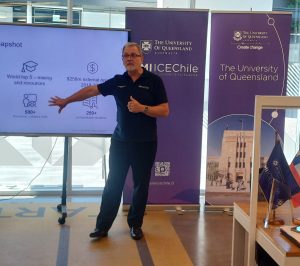
Mark Noppé, director of JKTech, presented on behalf of the Sustainable Minerals Institute of the University of Queensland.
“SMI-Chile,” he continued, “has the potential to deliver applied research and solutions across the full breadth of the Sustainable Minerals Institute’s capabilities. Likewise, the knowledge gained in Chile and the region can be applied to benefit international clients and partners directly from SMI-Chile, or by feeding this knowledge back through The University of Queensland, SMI and JKTech.”
Mark Noppé concluded his presentation by highlighting the opportunities arising from the global energy transition and future global economic growth.
“Meeting the growing demand for mineral supply,” he said, “requires shortening project development and expansion timelines while ensuring that this is done responsibly. However, this acceleration also raises concerns among stakeholders regarding its potential impact on investment decisions, particularly as the mining industry continues to strengthen its approach to social and environmental dimensions. This presents a wide range of operational, governance, financing, regulatory, social and technical challenges, where we inform the process and contribute solutions based on our experience and expertise developed in Australia and Chile.”
Check out this video that summarizes some moments from this day