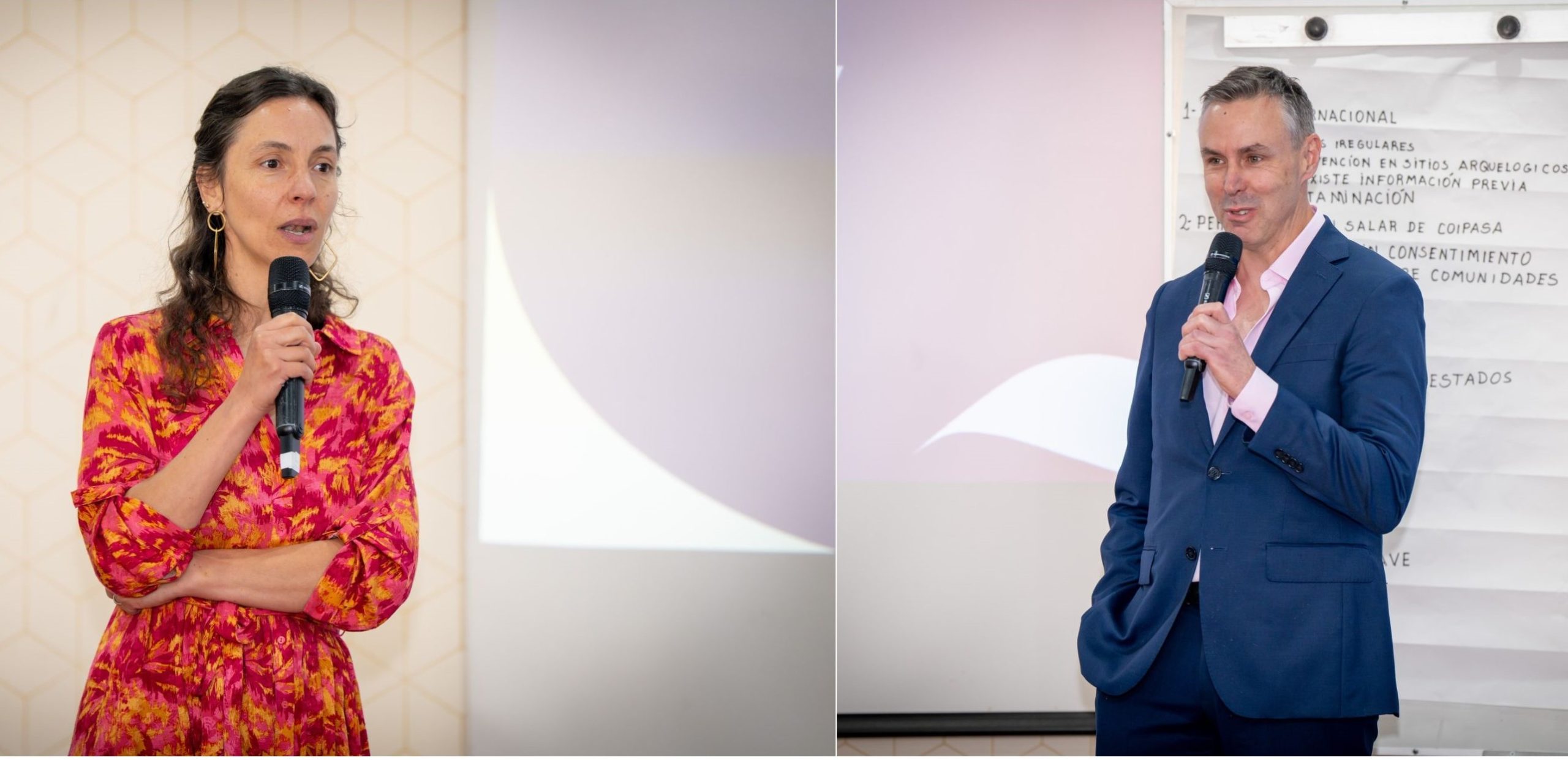
Mónica Morales, head of the Social Performance and Resource Governance area at SMI-ICE-Chile, and Nigel Wight, senior researcher in the same area at our Center, participated in the “Meeting of Indigenous Communities and Peoples within the Framework of the National Lithium Strategy – Chile,” co-organized by the Ministries of Mining, Social Development and Family, and the International Labour Organization (OIT), under the leadership of the UN Human Rights Office, with the purpose of strengthening the capacities and knowledge of indigenous peoples and communities regarding international standards and regulations on human rights and the rights of indigenous peoples.
This meeting was attended by authorities from the Ministry of Mining, the UN Human Rights Office, representatives from the ILO, and more than 45 representatives from communities in Tarapacá, Antofagasta, and Atacama, linked to the territories where indigenous consultation processes are being carried out for the Special Lithium Operation Contract (CEOL), within the framework of the National Lithium Strategy.
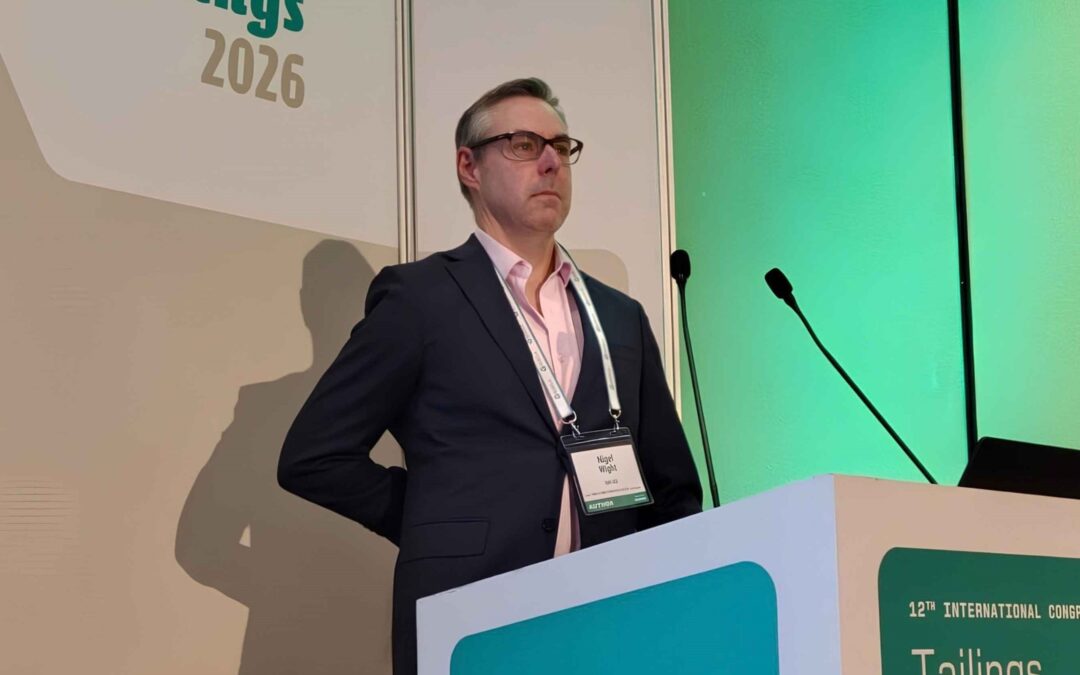
Mónica Morales and Nigel Wight, invited due to their extensive experience working with Indigenous communities on mining projects, presented on the topic: “Resource Governance and Indigenous Peoples.”
In his presentation, Nigel Wight addressed key elements for defining resource governance, delving into a brief historical and conceptual overview that allows for an understanding of the origin of agreements and conventions between Indigenous communities and companies, particularly as they relate to the experiences of Canada and Australia, and the work developed by Professor Ciaran O’Faircheallaigh.
In the second part of his presentation, Mónica Morales elaborated on recommendations for the structure and functions of the governance of Indigenous Community Licensing Organizations (CEOLs), emphasizing the opportunity to strengthen the role of Indigenous communities within the framework of a lithium project. In this regard, she detailed the scope of the different aspects that influence the operating protocol or “governance of governance.”
Among other topics, both addressed the impact of the following variables: the distribution of compensation among communities; the mechanisms for resource allocation and the conditions for using those funds; the mechanisms for monitoring, controlling the use, and ensuring accountability for these funds; the importance of defining the role of the developer and independent third parties in the definition, execution, monitoring, and evaluation of projects; and the value of creating opportunities for mutual learning to share knowledge, as well as for reporting and providing access to information.
Mónica Morales emphasized that it is essential to build effective channels for long-term engagement, where good governance is a key element. “For us,” she noted, “these opportunities are invaluable because they allow us to directly hear the concerns and interests of Indigenous communities regarding the mining industry. Opportunities like these inspire us on how to implement sustainable mining that generates value and respects ancestral land-use practices.”

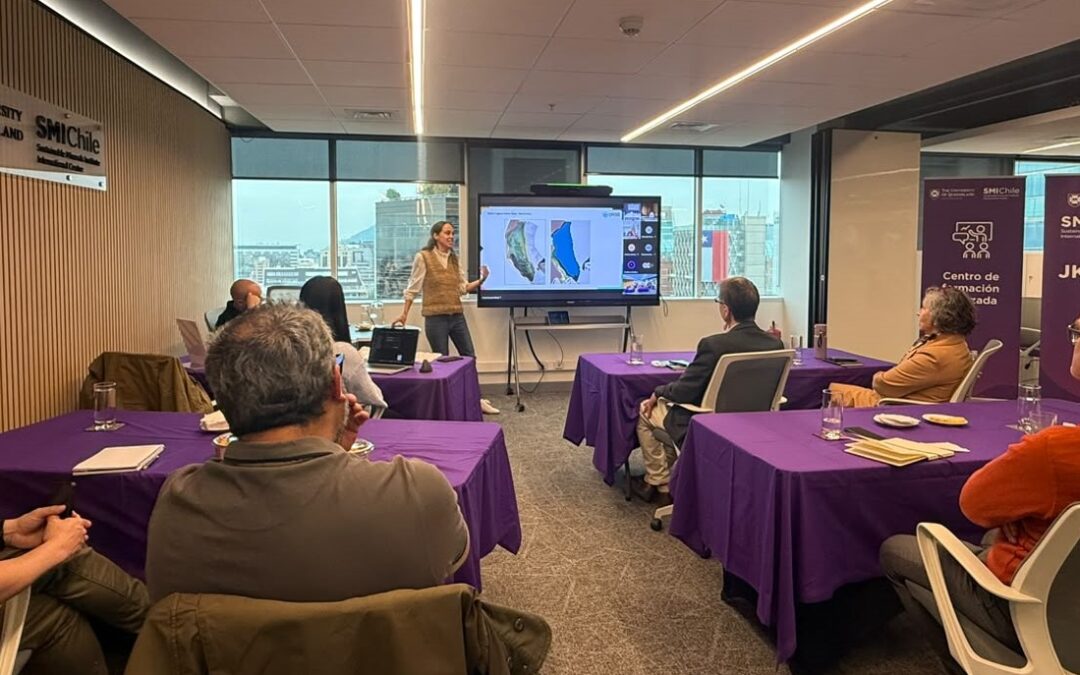
Meeting of Indigenous Communities and Peoples within the framework of the National Lithium Strategy – Chile (Photo: UN Human Rights South America)


Meeting of Indigenous Communities and Peoples within the framework of the National Lithium Strategy – Chile (Photo: UN Human Rights South America)